• Working Hours - Mon - Fri: 8:30 - 17:30

Category Archives: Homilies

Saints Peter and Paul Parish Rokon Marks 25-Year

29 June 2026

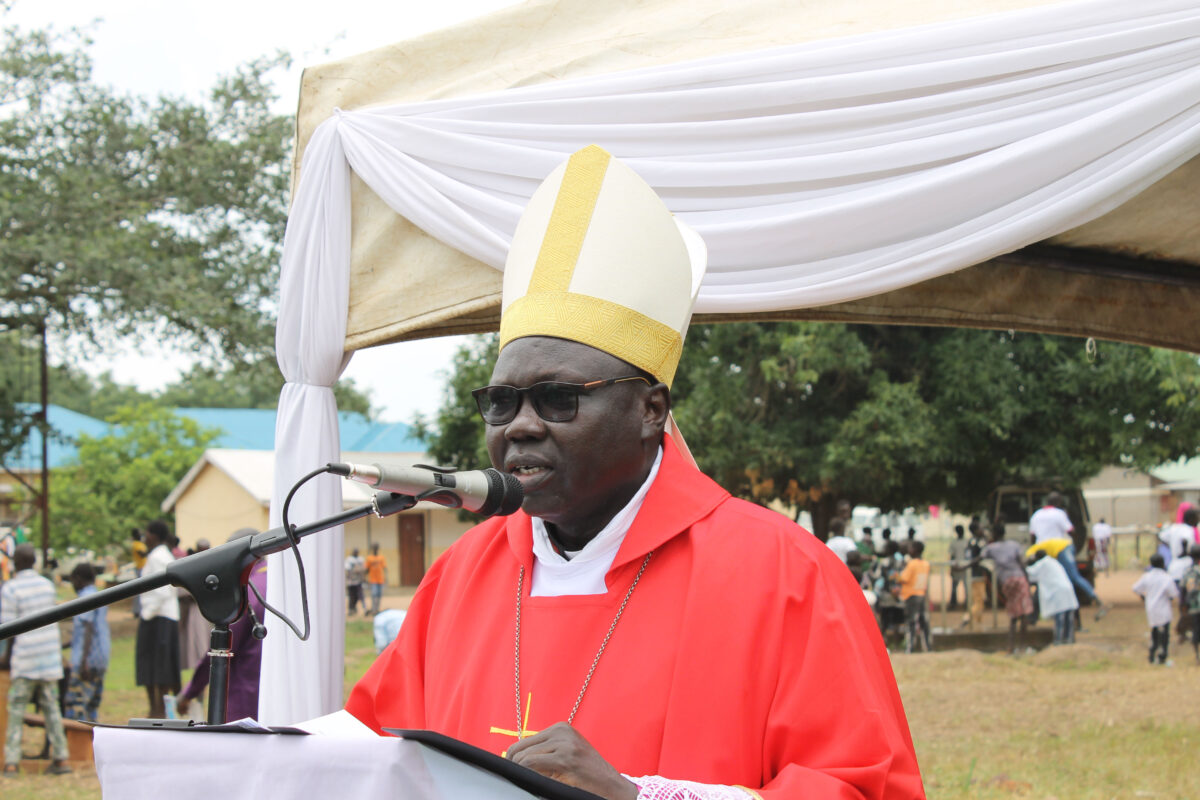
The Catholic faithful of Rokon gathered in large numbers today to celebrate a historic double milestone: the Solemnity of Saints Peter and Paul and the 25th anniversary of the parish’s return to its ancestral home. The mass was presided over by the Auxiliary Bishop of the Catholic Archdiocese of Juba, Most Rev. Santo Loku Pio Doggale.

During the homily Bishop Witness of Two Pillars:

Preaching on the liturgical theme, “You are Peter, and I will give you the keys of the kingdom of Heaven,” Bishop Doggale detailed the transformative journeys of the two foundational apostles.

He described Saint Peter as a professional fisherman called from the shores of Galilee who, despite his human weaknesses and denying Christ three times, was chosen as the trusted leader of the Church. Saint Paul, conversely, was a brilliant lawyer trained under Gamaliel who turned from a fierce persecutor of Christians into the Church’s greatest defender among the Gentiles.

The Bishop emphasized that keys are entrusted only to servants of deep integrity:

“Keys of any given institution are always given to the most trusted individuals, who will not open at will any gate, door, or safe unless authorized,” the Bishop noted. “You need to know as well that keys are given to servants, meaning those holding the keys are not the owners; they are servants, trusted for their integrity of heart.”

He reminded the congregation that both men lived lives of active faith and died as martyrs in Rome—Peter crucified upside down on Vatican Hill and Paul beheaded on the Ostian Way.

A Quarter-Century of Resilience for the Yangwara People:

For the local community, the feast carried immense emotional and historic weight, marking exactly 25 years since the parish was restored to its original grounds following years of displacement.

Bishop Doggale utilized the occasion to honor the resilience of the Yangwara people, acknowledging the heavy sacrifices and losses experienced by the community over the last quarter-century.

“We too remember the martyrs of this land, the people of Yangwara, killed in cold blood for the last twenty-five years in their own land,” the Bishop expressed. “You have the faith, the zeal, the courage, and the strength for this land and for the Republic of South Sudan. You are the pillars of this nation; one day God will free you as he did to Peter, your patron.”

A Call to Action:

Drawing from Saint Peter’s first public miracle in the Acts of the Apostles, where he commanded a lame man to “rise and walk,” the Bishop challenged the local congregation to be agents of spiritual and communal transformation.

“Yangwara can make miracles by being faithful to the command of our Lord Jesus Christ,” he urged. “May this day inspire each and every one of us to be good servants… We too can be trusted with the keys of our lives, our families, our community, our state, and our Nation.”

The celebration concluded with a traditional blessing offered in the local language, invoking divine peace and unity over the Yangwara community across South Sudan:

“Yanwara wörö ko mok!!! Ti gun ‘Borone Yanwara ling, I jur, Juba, I jurön ti kak ‘bukulun ko Yanwara ti paradiso. Ti gun ‘Borone ta lig; I Karen ti Monye, ko ti Tore, ko ti mulökötyo Loke. Amen.”

Wurjang Chapel Named After St. George as Bishop Santo Urges Support for Gospel Mission

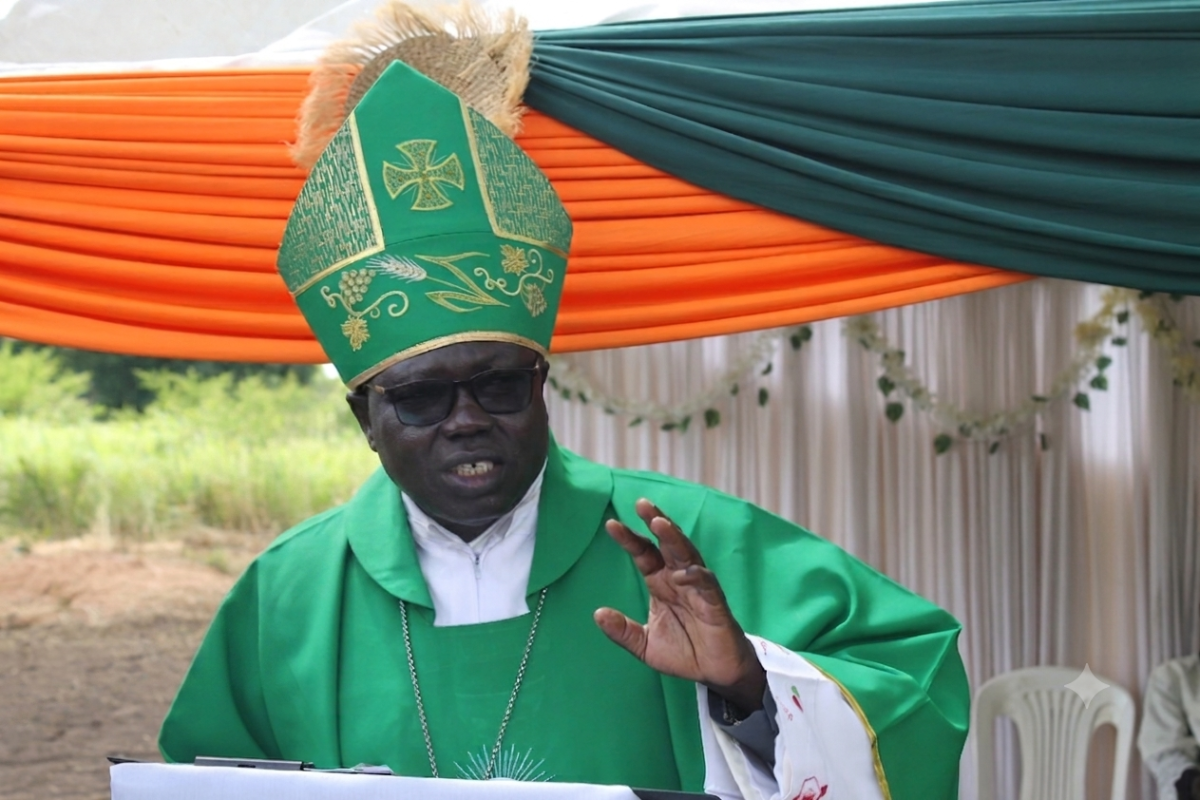
During the celebration of the Thirteenth Sunday in Ordinary Time, Auxiliary Bishop of Juba, Bishop Santo Loku Pio Doggale, called on Christians to support those dedicated to preaching the Gospel and to live faithfully according to their baptismal calling.

Reflecting on the day’s Scripture readings, Bishop Santo said the faithful should welcome and care for priests, bishops, deacons, catechists, religious brothers and sisters, and all who dedicate their lives to proclaiming the Good News. He recalled the example from the First Reading, where a generous family received God’s blessing through the prophet after showing hospitality.

The Bishop urged Christians to distinguish between genuine messengers of God and those who seek to bring harm, stressing that Christian hospitality should always be guided by wisdom and faith. He also reminded the faithful that baptism calls every believer to share in Christ’s mission by serving others, defending the vulnerable, and becoming “salt and light” in society.

Quoting the Gospel, “Whoever does not take up his cross is not worthy of me,” Bishop Santo encouraged Christians to embrace their responsibilities with courage and generosity, saying that every vocation and sacrifice contributes to God’s plan of salvation.

At the conclusion of the celebration, Bishop Santo, on behalf of His Eminence, Cardinal Stephen Ameyu Martin Mulla, Metropolitan Archbishop of Juba, officially announced that the chapel in Wurjang Village would henceforth be known as St. George Chapel, Wurjang. The chapel’s patronal feast will be celebrated annually on April 23.

The Bishop described St. George as one of Christianity’s most revered martyrs, remembered for his unwavering faith, courage, and commitment to Christ. He noted that the saint’s enduring legacy symbolizes the triumph of good over evil and continues to inspire Christians around the world to live with faith, courage, and service.

The faithful concluded the celebration by invoking their new patron, praying together: “St. George, pray for us.”

Eleventh Sunday in Ordinary Time (Year A)

Today, we celebrate the Eleventh Sunday in Ordinary Time, a day that reminds us of God’s profound, unchanging love and his universal call to mission. In the first reading, God offers the people of Israel a wonderful future, proposing an alliance with them after freeing them from slavery in Egypt. He promises that if they listen to his voice and remain faithful, they will become a kingdom of priests and a holy nation—a people set apart and reserved for God. However, over the centuries, this message of hope suffered in transmission. By the time of Jesus, the religious leaders had diminished this grand vision, labeling only those who rigidly followed minutely detailed regulations as “holy,” while casting out the helpless and harassed as “sinners.”

It was precisely for these forgotten people, living without direction or purpose, that Jesus came to bring new hope. As the Gospel reveals, Jesus looks upon the crowds with deep compassion because they are like sheep without a shepherd. In a world where people are often only interested in furthering their own careers and comfort—ignoring the hungry, sick, and oppressed—Jesus acts. He calls and sends out the twelve apostles, a number intentionally linked to the twelve tribes of Israel, to signal the restoration and birth of a new people of God: the Church. The apostles are commanded to bring a radical message of hope: the Kingdom of God is at hand, and a new sort of life is available to everyone.

Our confidence in this new life does not rely on our own strength, as Saint Paul powerfully reminds us in the second reading to the Romans. Paul assures us that our salvation is not based on our good works, our qualities, or our unstable fidelity, but entirely on God’s unchanging love. Human love is weak; we rarely sacrifice for anyone outside our friends and family. Yet, God proved his love by giving his only Son to save us while we were still his enemies and far from him. If God loved us so deeply when we were broken, how much more will he sustain us now that he has justified us? Our sins will never overpower his love; we may abandon him, but he will never abandon us.

This overwhelming grace demands a response, shifting our focus from ourselves to the welfare of others. When Jesus orders his disciples to cure the sick, raise the dead, and drive out devils, he is not just speaking of physical miracles without medicine. Instead, these are vivid images of the spiritual and physical warfare every Christian is called to wage against anything that ruins human life. To undertake this mission, Jesus recommends that we pray. The true aim of prayer is not to convince God to change his mind, but to transform our own hearts from selfishness to generosity, a total conversion of behaviour that allows us to see the world through Christ’s eyes.

In conclusion, every single disciple of Christ, regardless of status, has been entrusted with this vital ministry. We are the modern Church, mandated to go out and proclaim that the Kingdom of God is close at hand through our tangible works of love. May we allow our hearts to be broken by what breaks the heart of Jesus, and may our prayer drive us into the world to fight for the spiritual and physical healing of our brothers and sisters. Amen.

BISHOP SANTO LAKU HOMILY DURING THE FEAST OF SACRED HEART OF JESUS.

Congratulatory message and blessings from the Cardinal, wishing you grace and blessings.

The feast of the Sacred Heart of Jesus is a significant event in the Catholic Church, often celebrated on the Friday after the octave of Corpus Christi. It symbolizes the immense love and mercy of Jesus Christ, representing his boundless love for humanity. The devotion to the Sacred Heart began with the vision of sister Margaret Mary Alacoque, who received about Jesus’ heart, emphasizing the need for people to return love through prayer and devotion. This feast invites Catholics to
meditate on the infinite love of God for each individual, reflecting the profound mystery of the divine love.

The first reading of today, taken from the book of Deuteronomy, stated that “the Lord set his love upon you and chose you.” Referring to the people of Israel, a people sacred to the Lord: a holy people, a people set apart and not contaminated by the worship of false gods. The author of Deuteronomy stresses the notion of election by the covenant with God.
Israel was defined as a holy people, and when speaking about being elected, the author of Deuteronomy added that it is not the virtue and strength of the nation that caused the election, but that the love of God for the patriarchs is the main reason for choosing their descendants. (Dt.7:7-8), “It was not because you are the largest of all nations that the Lord set his heart on you and chose you, for you are really the smallest of all nations. It was because the Lord loved you and because of his fidelity to the oath he had sworn to your fathers, that he brought you out with his strong hand from the place of slavery, and ransomed you from the hand of Pharaoh, king of Egypt.”
That is why St. John says, “God is love.” Here, St. John does not make any difference between the love of God and the love of neighbor. That our faith in God is made possible and even perfect through the love we have for one another. “Those who abide in love abide in God, and God abides in them.”
Through the love of God for us, we are called to bring the people to God, especially those in need, that is the fulfilment of the mystery of the Divine love to humanity, which is the reason for our prayer today. The congregation of the Sacred Heart of Jesus, here in the Archdiocese of Juba, is trying to uphold this mission of love. Loving God in our neighbor.
Our society today is totally lost in this beautiful calling, and if we are not careful, we can be converted to their way of life, forgetting the purpose of our existence and mission to the world. The circular world has very advanced means to propagate its agenda of dominance, possession though violence and exclusion. As a result, wars keep emerging with effects of destruction and loss of human lives. Where is the love of God in human society today? It seems hatred is becoming more popular. It is hidden but revealed only to more children; those whose hearts are set on fire for others.

We are because God loved us, and our mission is to love God through his creation. And we are expected to act in God’s love embodied in us, because God abides in us as well. May God accept our prayers for the SHS congregation and bless them with more love for Him and the needy.

Santo Loku Pio Doggale,
Auxiliary bishop of Juba.

Given in Juba, St. Theresa Cathedral – Kator.

The Solemnity of the Most Holy Body and Blood of Our Lord Jesus Christ

On this important feast, the solemnity of the most holy body and blood of our Lord Jesus Christ, our children are telling us the insight of our faith: that Jesus may stay with us, that Jesus may make us holy, and that Jesus may continue to teach us about his presence in the Holy Eucharist. His presence—fully present in the Eucharist, in his body, in his blood, soul, and divinity—this is our faith. This is the faith of the Catholic Church. This is the faith that, after this, we are going to renew our baptismal promises in, here in the presence of our Lord Jesus Christ, fully God and fully human, for the salvation of our souls.

The sequence that we just heard being sung in Latin was giving us the meaning of this solemnity today. It is telling us that, “Lord, the angel’s food is given to the pilgrim who have striven.” For all those who strive, the angel’s food will be given.

Do you remember when the Canaanite woman came to Jesus and was pleading with him? The disciples came and spoke, and Jesus noted how Gentiles were called “dogs” by those outside the firstborn children of God, meaning the food of the children should not be given to them. Now, in this sequence, we are given a new beginning, a new birth, and a new status so that we may be called children of God through our baptism.

The sequence tells us that truth, “the ancient types fulfilling, Isaac bound, a victim willing.” Isaac was a type of Jesus. When Isaac was to be sacrificed, he was the only son of his father Abraham, and God asked for him to be offered. But then God provided a ram instead of Isaac, because Isaac was not the ultimate fulfillment of the Old Testament. Jesus is.

And when the people of Israel came out of Egypt, God, even in their stubbornness, gave them the bread of the angels to eat. That is why Moses said when he spoke to the people in the first reading, taken from the book of Deuteronomy 8:2-3 and 14-16: “You shall remember all the way which the Lord your God has led you these 40 years in the wilderness, that he might humble you, testing you to know what was in your heart, whether you would keep his commandments or not.”

Did they keep it? They were falling every time, but the Lord kept his love, kept his commandment, and gave them the food of the angels that they may be led. For their stubbornness, they were punished for 40 years to reach the promised land, but the Lord kept his covenant.

For our sins and for our stubbornness, the Lord fulfilled his covenant by bringing to us his only begotten Son, our Lord Jesus Christ. Today, in the Gospel of John, Jesus is telling us: “Truly, truly…” And when he says “truly, truly,” he is affirming exactly who he is. Jesus told us that he is the way, the truth, and the life. If today, here in St. John’s Gospel, he is repeating it truly, “…Truly, truly, amen, amen, listen carefully, my dear brother, my dear sister—you who have been drawn to become a son and a daughter of God. And Jesus is telling us today: ‘Truly, truly, I say to you, unless you eat of the flesh of the Son of Man and drink his blood, you have no life in you.’ Does it sing within you? Does it make sense to you today that on this day the Catholic Church should celebrate the most holy body and blood of our Lord Jesus Christ?

Does it hit you that as you are made sons and daughters, you are called to be part of the people who are partaking of his body and blood? Do you need new life within you? Then on this day of the celebration of Jesus’ presence in the Holy Eucharist—body, blood, soul, and divinity—let your light shine. May the words just now said by our children renew your faith that Jesus may stay with you. By partaking of his body and blood, may he make you holy. Always, as you come to church, may he continue to teach you about the things of heaven, because this food—his body, his blood—is food for our journey, our journey to heaven.

My dear brothers and sisters, the Holy Eucharist has been the mark of our Christian faith. Even from the Old Testament, we see the foreshadowing, and we know that the Christians of the New Testament, from the Acts of the Apostles, gathered to break bread. And as they gathered to break bread, they adored Jesus. They renewed their faith and they called upon him to remain with them so that they might be evangelizers, going out to preach Him who is present in the Holy Eucharist.

Our Christian identity has undergone a number of trials. Christians of old were even stopped from celebrating the Mass. I want to draw your attention to this: if they who went before us held the Mass so dear, we, the Christians of today, on this solemn day of the body and blood of our Lord Jesus Christ, have to say, “Jesus, renew my faith in you, that I may carry the spirit of all the saints, and especially the martyrs who died carrying you.”

One of the best examples we can give here is Saint Tarcisius. In the third century, he was a young man. If we were to count his age, he would be the age of these children in the choir here, these altar servers, these crusaders. Because the elderly were put in prison for the very reason of the Holy Eucharist—for their faith in the Holy Eucharist—this young, energetic acolyte was sent to take the Holy Eucharist to those in prison. Saint Tarcisius did this every Sunday.

Then, one Sunday, he was caught. He was caught by pagan soldiers, a pagan group of people, and was threatened to surrender the Holy Eucharist—to surrender Jesus, in whom he had utmost faith. What he did was grab Jesus, hold Him to his chest, and say, “I will never surrender him.” And because of that, they killed him. They killed him while he was holding the Eucharist. Today, because of his immense love and zeal for the Blessed Sacrament, Saint Tarcisius is honored as the patron saint of altar servers and acolytes. Brothers and sisters, what we see here simply as a piece of bread, our faith tells us is something far greater. Every time we celebrate the Mass on this altar, God is actively at work, performing a continuous miracle so that we—even as sinners—might partake of his body and blood. He does this so that we might become his brothers and sisters, because he said, “I’ve shown you everything. I’ve told you everything that I learned from my father.”

I urge you and plea with you: do not take up the arguments of those who questioned Jesus, asking, “How can this man give us his flesh to eat?” Jesus answers them directly, saying, “Truly, truly, if I do not give you my body to eat and my blood to drink, you will have no life in you.” May these words resonate deep within us today.

Today, we also remember all those who have died for this truth, including the Uganda Martyrs. They died because they believed in the Eucharist. They died because they believed in Jesus and refused to part ways with him. Whether we are alive or dead, we belong to the Lord. When the time comes, let us defend him. Let us open our mouths and our lips to boldly say, “I believe in him.” This is why the Catholic Church teaches that wilfully missing Sunday Mass is a grave sin.

Let us recall one of the most powerful testimonies from the early Church. During the brutal Roman persecution under Emperor Diocletian, a group of saints known as the Martyrs of Abitene in North Africa were arrested for gathering secretly. When the Roman proconsul demanded to know why they disobeyed the imperial decree, they answered with words that should echo in our hearts forever: “Sine dominico non possumus”—”Without the Lord’s Day, we cannot live.” They chose to be murdered and martyred rather than live a life without the Sunday Eucharist.

We must look at our own history and devotion. When we were in Khartoum, almost no Christian remained at home on Sunday. Christians who were forced to work on the Sabbath found the courage to defy those laws, saying, “I will gladly leave this job if you stop me from coming to the Sunday celebration.” Yet today, we are a free nation. We are citizens of South Sudan. We craved to have our own country, and the Lord graciously gave us this land. But tragically, today, a number of us are denying Sunday worship. A number of us are failing to honor Jesus in the Holy Eucharist, even while calling ourselves Catholic Christians. May the bells continue to ring in our ears until we come out to pray: “Jesus, stay with me. Jesus, make me holy. Jesus, teach me always.”

I want to conclude by sharing a beautiful message about Blessed Carlo Acutis, an Italian youth who died of leukemia in 2006 at the tender age of 15. He was a young man who thoroughly understood modern technology. At that young age, he used his computer skills to document and teach the world about Eucharistic miracles, cutting across oceans from Lanciano to South America. Knowing he was close to death, his famous saying was, “The Eucharist is my highway to heaven.” Brothers and sisters, let these children in our choir and our altar servers remind us of Carlo Acutis’ beautiful witness.

Let us learn a profound lesson from this young saint, whose spirit is mirrored in the presence of our children today. Dear brother and sister, love the Eucharist above all else—even above yourself—because it is Jesus Himself. Attend Mass regularly and faithfully. Every time you enter the church doors, let your heart beat with excitement because you are standing face-to-face with the God who redeemed you from your sins. Spend quality time in Eucharistic adoration; we host adoration here every Thursday, yet some of us rush away instead of rushing toward Him.

May this Sunday entirely renew our faith in our Lord Jesus Christ. Let us use our modern technology to evangelize his presence, just like Carlo Acutis did. Strive for holiness in the midst of your ordinary daily life, knowing that your Lord lives. Carry this sentence with you and repeat it always: The Eucharist is my highway to heaven.