• Working Hours - Mon - Fri: 8:30 - 17:30

Author Archives: Noel Topi

Catholic Bishops Call for Peace, Dialogue and Economic Relief Ahead of South Sudan’s Elections

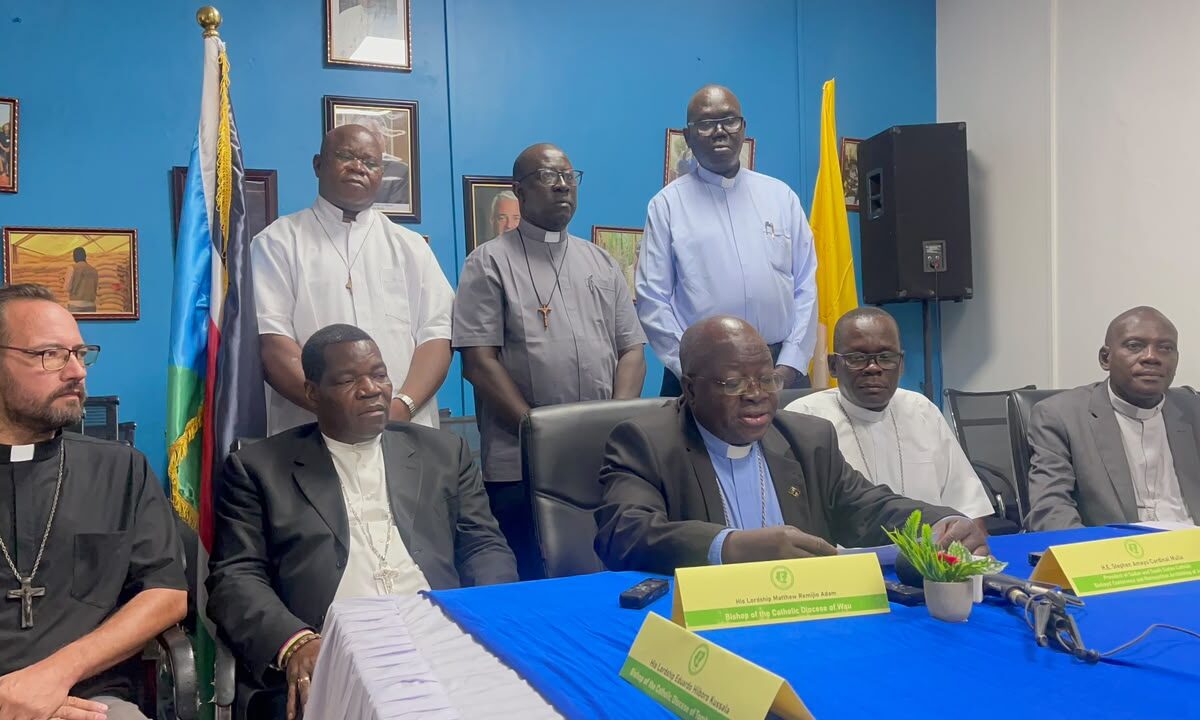
JUBA, South Sudan, July 17, 2026 – The Catholic Bishops of the Ecclesiastical Province of Juba have called for peace, national dialogue and urgent action to address South Sudan’s worsening economic and security situation following their annual meeting held in Juba from 15–17 July 2026.

In a communiqué issued at the conclusion of the meeting, the bishops expressed solidarity with South Sudanese facing severe economic hardship caused by the continued depreciation of the South Sudanese pound, soaring prices of goods and services, and delays in the payment of government salaries.

The bishops also voiced deep concern over the persistent violence affecting communities across the country, repeated clashes between the South Sudan People’s Defence Forces and armed opposition groups, and what they described as the violent encroachment of the Uganda People’s Defence Forces along South Sudan’s southern border.

While thanking God that no Ebola cases have been reported in the country, the bishops urged continued vigilance against the disease. They also expressed sympathy for farmers whose crops were damaged by drought and heat waves, appealing to the international community and humanitarian partners to assist communities facing growing food insecurity.

Addressing the country’s political future, the bishops noted the National Elections Commission’s announcement that general elections are scheduled for 22 December 2026, a date that coincides with the Christmas season. They warned of a potential constitutional and transitional crisis, whether the elections proceed or not, and called on political leaders to fully implement the 2018 Revitalized Peace Agreement in good faith.

The bishops urged that all decisions regarding the electoral process be guided by dialogue, constitutional order, legal clarity, adequate preparation and the common good, emphasizing that the elections should strengthen national unity rather than deepen divisions.

They also appealed to all South Sudanese to reject violence, tribalism, hatred, misinformation and incitement, encouraging citizens to embrace fraternity, respect and solidarity.

Reaffirming the Church’s commitment to promoting peace, justice and reconciliation, the bishops announced that they will soon release a comprehensive pastoral message offering deeper guidance on the national elections and the state of affairs in South Sudan in light of the Gospel and the Church’s social teachings.

The communiqué concluded with a call for prayers across the country, asking God to grant wisdom to national leaders, courage to citizens, healing to communities and lasting peace for South Sudan through the intercession of the Blessed Virgin Mary, Queen of Peace.

The communiqué was issued in Juba on 17 July 2026 at the conclusion of the bishops’ annual meeting.

Saints Peter and Paul Parish Rokon Marks 25-Year

29 June 2026

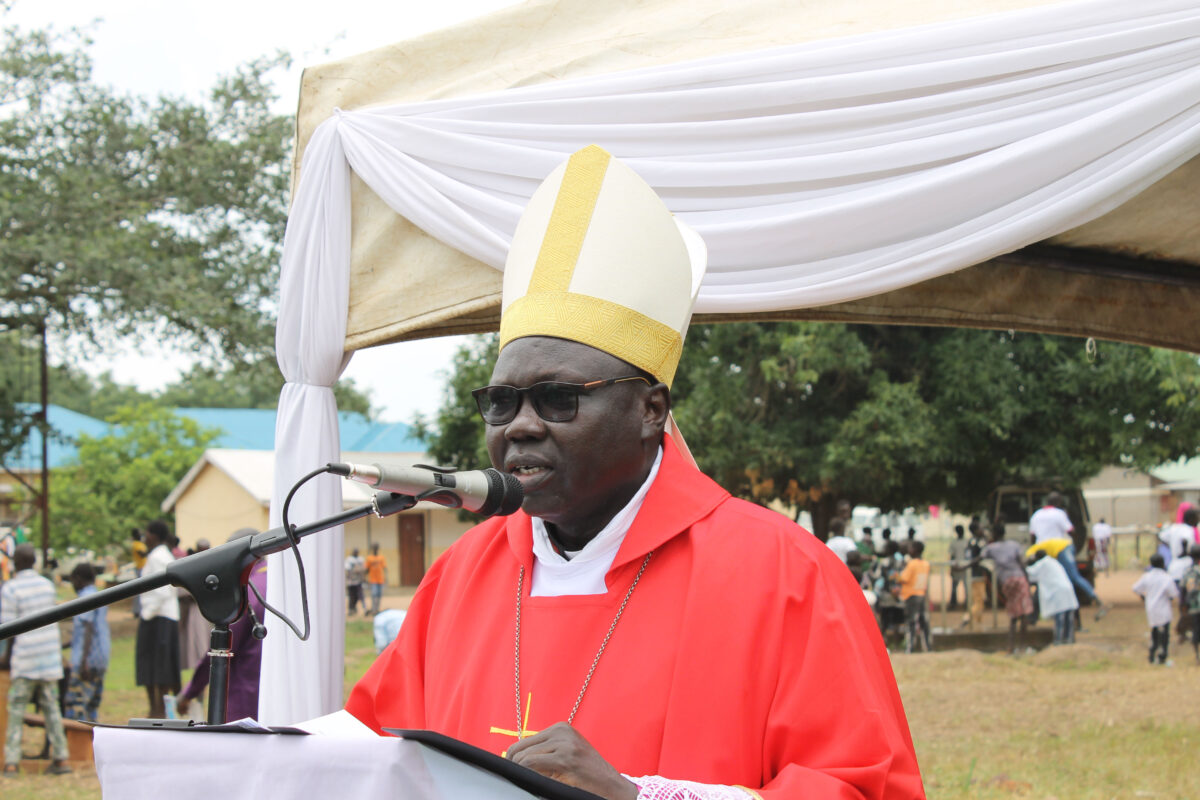
The Catholic faithful of Rokon gathered in large numbers today to celebrate a historic double milestone: the Solemnity of Saints Peter and Paul and the 25th anniversary of the parish’s return to its ancestral home. The mass was presided over by the Auxiliary Bishop of the Catholic Archdiocese of Juba, Most Rev. Santo Loku Pio Doggale.

During the homily Bishop Witness of Two Pillars:

Preaching on the liturgical theme, “You are Peter, and I will give you the keys of the kingdom of Heaven,” Bishop Doggale detailed the transformative journeys of the two foundational apostles.

He described Saint Peter as a professional fisherman called from the shores of Galilee who, despite his human weaknesses and denying Christ three times, was chosen as the trusted leader of the Church. Saint Paul, conversely, was a brilliant lawyer trained under Gamaliel who turned from a fierce persecutor of Christians into the Church’s greatest defender among the Gentiles.

The Bishop emphasized that keys are entrusted only to servants of deep integrity:

“Keys of any given institution are always given to the most trusted individuals, who will not open at will any gate, door, or safe unless authorized,” the Bishop noted. “You need to know as well that keys are given to servants, meaning those holding the keys are not the owners; they are servants, trusted for their integrity of heart.”

He reminded the congregation that both men lived lives of active faith and died as martyrs in Rome—Peter crucified upside down on Vatican Hill and Paul beheaded on the Ostian Way.

A Quarter-Century of Resilience for the Yangwara People:

For the local community, the feast carried immense emotional and historic weight, marking exactly 25 years since the parish was restored to its original grounds following years of displacement.

Bishop Doggale utilized the occasion to honor the resilience of the Yangwara people, acknowledging the heavy sacrifices and losses experienced by the community over the last quarter-century.

“We too remember the martyrs of this land, the people of Yangwara, killed in cold blood for the last twenty-five years in their own land,” the Bishop expressed. “You have the faith, the zeal, the courage, and the strength for this land and for the Republic of South Sudan. You are the pillars of this nation; one day God will free you as he did to Peter, your patron.”

A Call to Action:

Drawing from Saint Peter’s first public miracle in the Acts of the Apostles, where he commanded a lame man to “rise and walk,” the Bishop challenged the local congregation to be agents of spiritual and communal transformation.

“Yangwara can make miracles by being faithful to the command of our Lord Jesus Christ,” he urged. “May this day inspire each and every one of us to be good servants… We too can be trusted with the keys of our lives, our families, our community, our state, and our Nation.”

The celebration concluded with a traditional blessing offered in the local language, invoking divine peace and unity over the Yangwara community across South Sudan:

“Yanwara wörö ko mok!!! Ti gun ‘Borone Yanwara ling, I jur, Juba, I jurön ti kak ‘bukulun ko Yanwara ti paradiso. Ti gun ‘Borone ta lig; I Karen ti Monye, ko ti Tore, ko ti mulökötyo Loke. Amen.”

Wurjang Chapel Named After St. George as Bishop Santo Urges Support for Gospel Mission

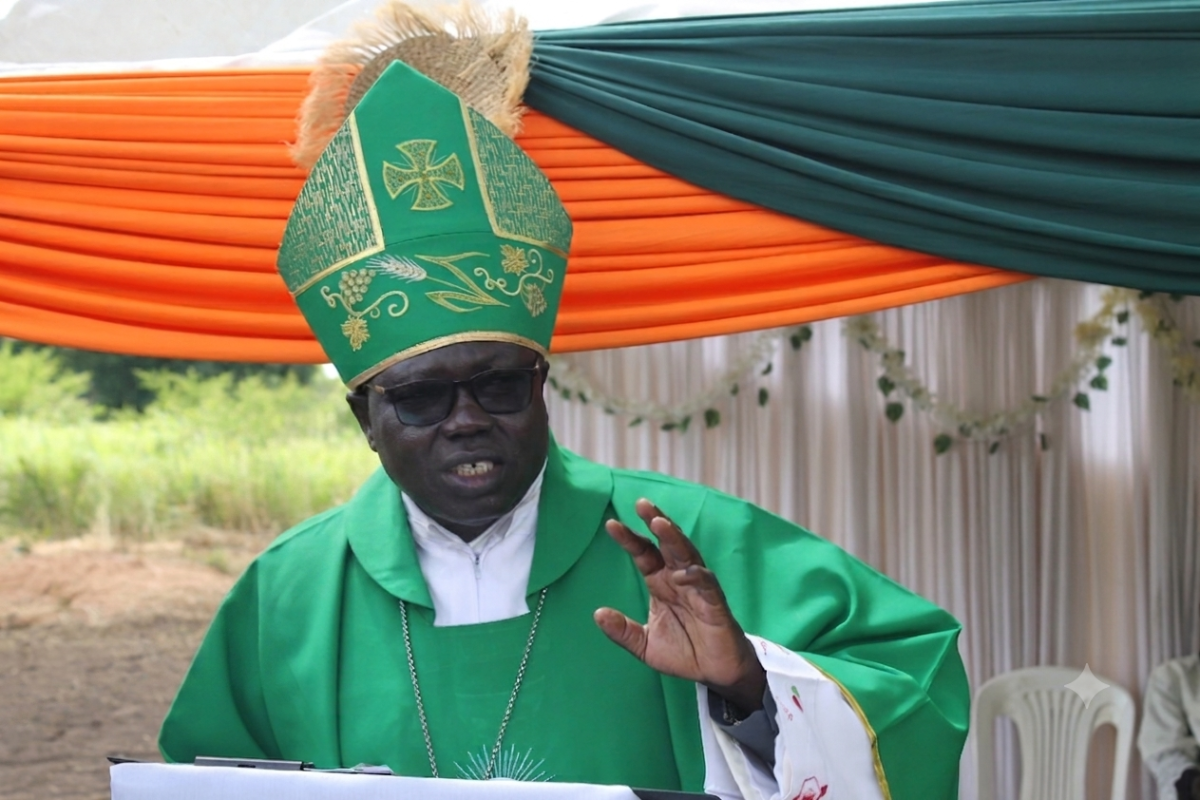
During the celebration of the Thirteenth Sunday in Ordinary Time, Auxiliary Bishop of Juba, Bishop Santo Loku Pio Doggale, called on Christians to support those dedicated to preaching the Gospel and to live faithfully according to their baptismal calling.

Reflecting on the day’s Scripture readings, Bishop Santo said the faithful should welcome and care for priests, bishops, deacons, catechists, religious brothers and sisters, and all who dedicate their lives to proclaiming the Good News. He recalled the example from the First Reading, where a generous family received God’s blessing through the prophet after showing hospitality.

The Bishop urged Christians to distinguish between genuine messengers of God and those who seek to bring harm, stressing that Christian hospitality should always be guided by wisdom and faith. He also reminded the faithful that baptism calls every believer to share in Christ’s mission by serving others, defending the vulnerable, and becoming “salt and light” in society.

Quoting the Gospel, “Whoever does not take up his cross is not worthy of me,” Bishop Santo encouraged Christians to embrace their responsibilities with courage and generosity, saying that every vocation and sacrifice contributes to God’s plan of salvation.

At the conclusion of the celebration, Bishop Santo, on behalf of His Eminence, Cardinal Stephen Ameyu Martin Mulla, Metropolitan Archbishop of Juba, officially announced that the chapel in Wurjang Village would henceforth be known as St. George Chapel, Wurjang. The chapel’s patronal feast will be celebrated annually on April 23.

The Bishop described St. George as one of Christianity’s most revered martyrs, remembered for his unwavering faith, courage, and commitment to Christ. He noted that the saint’s enduring legacy symbolizes the triumph of good over evil and continues to inspire Christians around the world to live with faith, courage, and service.

The faithful concluded the celebration by invoking their new patron, praying together: “St. George, pray for us.”

Salesian Regional Councillor Fr. Innocent Bizimana Conducts Pastoral Visit to South Sudan, Rallies Catholic Media for Peace.

Father Innocent Bizimana, the newly elected Regional Councillor for the newly established East and Southern Africa Region of the Salesians of Don Bosco, has arrived in South Sudan for a key pastoral visit. The tour marks one of his first major initiatives since taking office following organizational updates enacted by the Congregation, which consolidated Salesian ministries across the continent into a vast geographic region.

The expanded jurisdiction now unites nine provinces across 21 nations: Sudan, South Sudan, Ethiopia, Eritrea, Kenya, Tanzania, Mozambique, Rwanda, Burundi, Uganda, Zambia, Malawi, Zimbabwe, Botswana, Angola, Namibia, South Africa, Lesotho, Madagascar, and Mauritius.

Arriving in Juba, Fr. Bizimana underscored that the primary objective of his itinerary is first-hand accompaniment and assessing the welfare of the religious community and its local impact.

“I came to South Sudan to visit the Salesians and to see, through this short visit, how life is going and how our pastoral work is progressing,” Fr. Bizimana shared. “May God bless you.”

Engaging with Local Catholic Media

Fr. Bizimana described the Radio Maria South Sudan, or Catholic radio network, as an indispensable spiritual and social asset for the country as it continues its path toward stability.

“I thank Radio Maria South Sudan for the good work they are doing,” he stated during his address. “It is a big power for the Church, and even for the country. You have to prepare yourselves to give a good message and to strengthen the people.”

A Blueprint for Impact: Prayer and Peacebuilding

The regional leader reminded the broadcast team that their programming carries a profound social responsibility, urging them to keep prayer and the promotion of national unity at the heart of their broadcasting identity.

“The first thing is to pray, because the topic of the radio is to keep the people in peace and to go ahead in the faith,” Fr. Bizimana emphasized, pointing out that the media remains a vital lifeline for fostering hope.

Eleventh Sunday in Ordinary Time (Year A)

Today, we celebrate the Eleventh Sunday in Ordinary Time, a day that reminds us of God’s profound, unchanging love and his universal call to mission. In the first reading, God offers the people of Israel a wonderful future, proposing an alliance with them after freeing them from slavery in Egypt. He promises that if they listen to his voice and remain faithful, they will become a kingdom of priests and a holy nation—a people set apart and reserved for God. However, over the centuries, this message of hope suffered in transmission. By the time of Jesus, the religious leaders had diminished this grand vision, labeling only those who rigidly followed minutely detailed regulations as “holy,” while casting out the helpless and harassed as “sinners.”

It was precisely for these forgotten people, living without direction or purpose, that Jesus came to bring new hope. As the Gospel reveals, Jesus looks upon the crowds with deep compassion because they are like sheep without a shepherd. In a world where people are often only interested in furthering their own careers and comfort—ignoring the hungry, sick, and oppressed—Jesus acts. He calls and sends out the twelve apostles, a number intentionally linked to the twelve tribes of Israel, to signal the restoration and birth of a new people of God: the Church. The apostles are commanded to bring a radical message of hope: the Kingdom of God is at hand, and a new sort of life is available to everyone.

Our confidence in this new life does not rely on our own strength, as Saint Paul powerfully reminds us in the second reading to the Romans. Paul assures us that our salvation is not based on our good works, our qualities, or our unstable fidelity, but entirely on God’s unchanging love. Human love is weak; we rarely sacrifice for anyone outside our friends and family. Yet, God proved his love by giving his only Son to save us while we were still his enemies and far from him. If God loved us so deeply when we were broken, how much more will he sustain us now that he has justified us? Our sins will never overpower his love; we may abandon him, but he will never abandon us.

This overwhelming grace demands a response, shifting our focus from ourselves to the welfare of others. When Jesus orders his disciples to cure the sick, raise the dead, and drive out devils, he is not just speaking of physical miracles without medicine. Instead, these are vivid images of the spiritual and physical warfare every Christian is called to wage against anything that ruins human life. To undertake this mission, Jesus recommends that we pray. The true aim of prayer is not to convince God to change his mind, but to transform our own hearts from selfishness to generosity, a total conversion of behaviour that allows us to see the world through Christ’s eyes.

In conclusion, every single disciple of Christ, regardless of status, has been entrusted with this vital ministry. We are the modern Church, mandated to go out and proclaim that the Kingdom of God is close at hand through our tangible works of love. May we allow our hearts to be broken by what breaks the heart of Jesus, and may our prayer drive us into the world to fight for the spiritual and physical healing of our brothers and sisters. Amen.