June is one of the richest months in the Catholic calendar, overflowing with saints, solemnities, martyrs, apostles, and profound devotions centered on the Sacred Heart of Jesus and the Immaculate Heart of Mary.
The Church invites the faithful to enter more deeply into the mysteries of divine love through the witness of holy men and women who gave everything to Christ.
Throughout June, the Blessed Virgin Mary appears repeatedly as Mother, Queen, disciple, and intercessor, always leading souls to her Son.
The month of June is traditionally dedicated to the Sacred Heart of Jesus. This devotion reminds Catholics that Christianity is not merely a philosophy or moral code, but a relationship with the living Heart of Christ — burning with love for humanity. The Sacred Heart reveals the mercy of God, wounded for sinners yet endlessly compassionate. Closely united to this devotion is the Immaculate Heart of Mary, whose heart beat perfectly in union with the Heart of her Son. The saints of June teach us how to live within these two Hearts.
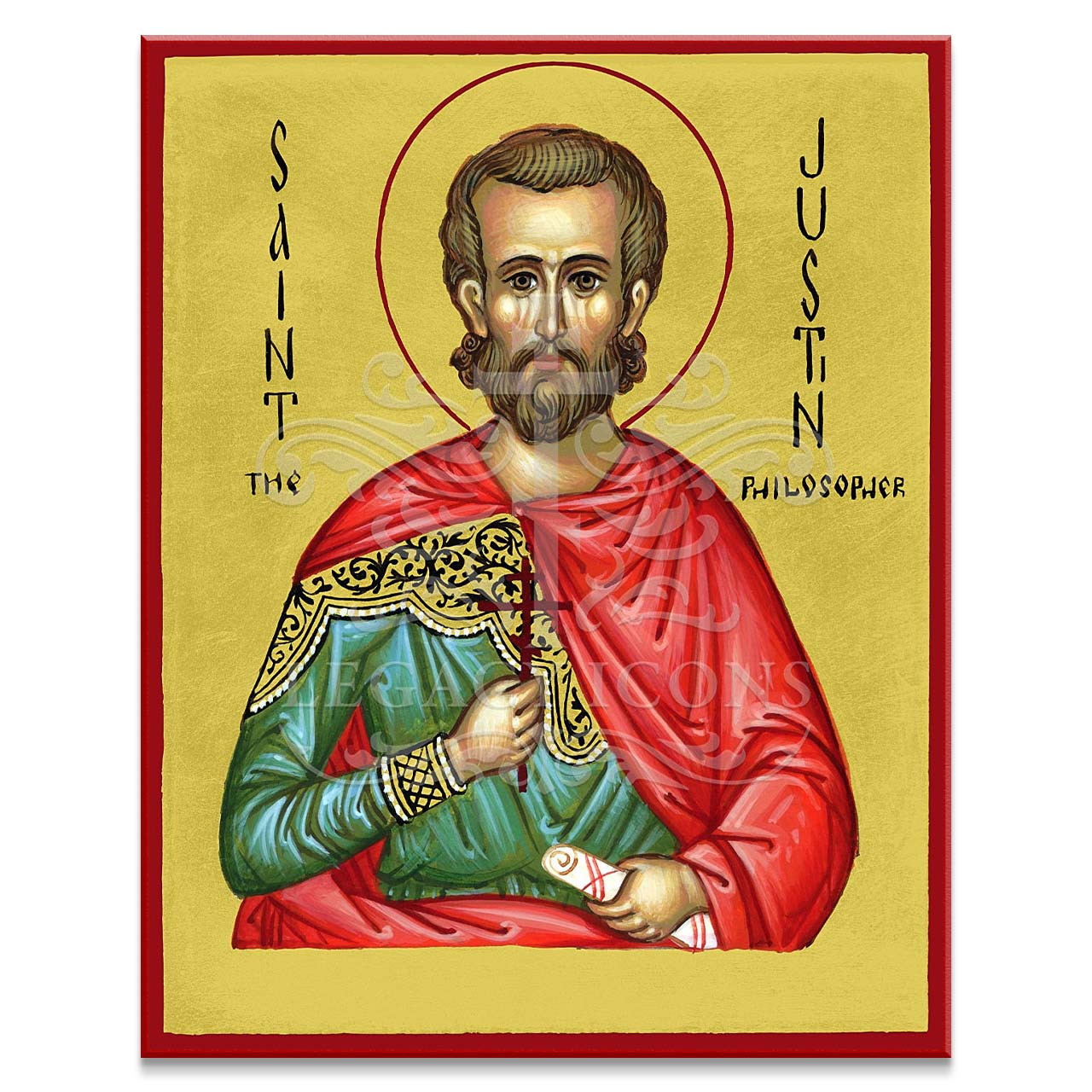
One of the first great feasts of the month is the Memorial of St. Justin Martyr on June 1. A brilliant philosopher of the second century, Justin searched tirelessly for truth before discovering Christ. He ultimately gave his life defending the Catholic faith before pagan authorities. His life reminds modern Catholics that faith and reason are not enemies. Like Mary, who pondered the mysteries of God in her heart, Justin sought truth with humility and courage.
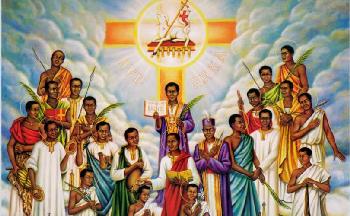
On June 3, the Church honors St. Charles Lwanga and Companions, the Ugandan martyrs who died protecting purity and fidelity to Christ. These young men courageously resisted immoral demands from a corrupt king and were burned alive for the faith. Their witness echoes the purity of the Blessed Virgin Mary, whose total consecration to God became the model of holiness for all Christians. In a culture often hostile to chastity and virtue, these martyrs proclaim that holiness is worth dying for.
June 5 brings the feast of St. Boniface, the fearless missionary bishop known as the “Apostle of Germany.” He evangelized pagan peoples with remarkable courage, famously cutting down a sacred pagan oak tree dedicated to Thor. Boniface reminds Catholics that the Gospel transforms cultures. Like Mary crushing the serpent beneath her feet, the saints conquer darkness not by worldly power but through obedience to God.
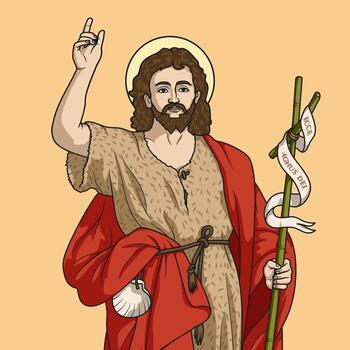
One of the most beloved solemnities of June is the Nativity of St. John the Baptist on June 24. John is unique among the saints because the Church celebrates his birth rather than only his death. Sanctified in the womb at the Visitation, John leapt for joy in the presence of Jesus hidden within Mary. This feast beautifully highlights Mary’s role as the first tabernacle of Christ. Wherever Mary goes, Jesus is present. John’s entire mission was to decrease so Christ could increase — the very spirit of Marian discipleship.
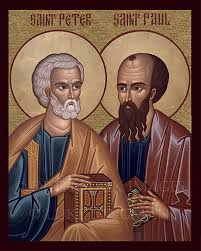
June 29 celebrates Saints Peter and Paul, pillars of the Church. Peter, the first pope, and Paul, the great missionary apostle, gave their lives in Rome for Christ. Their feast demonstrates the universality and apostolic authority of the Catholic Church. Mary stood beside the apostles in prayer at Pentecost, strengthening the infant Church with maternal love. The courage of Peter and Paul grew from the same Holy Spirit who overshadowed the Virgin Mary at the Annunciation.
June is also marked by two deeply Marian celebrations connected to the Sacred Heart. The Solemnity of the Sacred Heart of Jesus is followed immediately by the Memorial of the Immaculate Heart of Mary. The Church intentionally places these feasts together because the hearts of Jesus and Mary are inseparable. Mary’s heart reflects perfectly the love, mercy, and suffering of Christ. Devotion to her Immaculate Heart calls Catholics to purity, reparation, prayer, and total trust in God.
The saints of June are remarkably diverse: martyrs, missionaries, scholars, apostles, mystics, and pastors. Yet they share one common characteristic — radical love for Jesus Christ. Nearly all of them also possessed a deep devotion to the Blessed Virgin Mary. This is no coincidence. Every authentic saint becomes Marian because Mary always leads souls closer to Christ.
As Catholics journey through June, the Church offers a powerful spiritual invitation: enter the Sacred Heart of Jesus through the Immaculate Heart of Mary. The saints show that holiness is not reserved for a select few. It is the universal call of every baptized Christian.
In an age marked by confusion, division, and moral compromise, the holy men and women of June stand as radiant witnesses that sanctity is still possible. Through the prayers of the Blessed Virgin Mary and all the saints, may the faithful grow in courage, purity, truth, and burning love for Christ.
Thank you!
Fr. Charles Busak
Director of Social Communication, Archdiocese of Juba
SAINT CHARLES LWANGA, ST. KIZITO AND COMPANIONS, UNGANDA MARTYRS 3/06/2026. Today, together with the whole Church, we honour twenty-two Ugandan martyrs. They are the first martyrs of sub-Saharan Africa and true witnesses of the Christian faith. Charles Lwanga, a catechist and a young leader, was martyred in 1886 in Namugongo, in the outskirts of Kampala; they were both Catholics and Anglican royal pages, some of whom were not yet Baptist. King Mwanga, who despised the Christian religion gave orders that all the Christian pages in his service be laid upon a mat, bound, placed onto a pyre and burnt.
The story of the seven brothers in the second book of the Maccabees that we just read, clearly indicated to us that, the seven brothers have the courage to give up their lives because they are sure that God will grant them another one. Jesus will die on the cross with the same hope that the end corresponds to the beginning of the new life.
The second reading from the letter of St. Paul to the Romans, relates to us that nothing can separate us from the love of God. This is simply because there is often far too much separation between our life and our believe, between our faith and our practice of it. (The story of the pastor and the chicken be told if possible). Often we live in fear of the evil spirits and we seem to forget that no created thing can ever come between us and the love of God made visible in Christ Jesus. We should and are expected to relate the sacraments to our real life situation.
The love of God. God did not make the first human beings because he needed company, but because he wanted someone to whom he could show his generosity and love. God did not tell us to follow him because he needed our help, but because he knew that loving him would make us whole; complete.
The Gospel lends us to the Beatitudes. These are eight blessings taught by Jesus in the sermon on the Mount; highlighting virtues and attitudes that lead to spiritual fulfilment and the kingdom of Heaven. The Beatitudes opens the sermon on the Mount and present a radical vision of life in the kingdom of Heaven, each begins with “Blessed are…and describes a quality or circumstance that brings divine favour, emphasizing spiritual joy rather than worldly happiness. The term Beatitude comes from the Latin word, “Beatus”, meaning Blessed or Happy, reflecting a deep, enduring joy rooted in God’s Grace rather than external circumstances.
Practical Application: The Beatitudes call believers to live counter culturally, prioritizing Humility, compassion, and righteousness over worldly success. They encourage daily practices such as prayer, dependence on God, mercy towards others and peacemaking. By embodying these virtues, individuals experience spiritual joy and foretaste of the kingdom of heaven amid challenges.
Key takeaway: The Beatitudes are not merely moral instructions, but an invitation to a transformed life. They define the character of the idea! disciple and promise both present spiritual fulfilment and future reward in God’s kingdom. Living according to these principles, fosters deep lasting joy and aligns all believers with values of the kingdom of heaven.
Each of the eight beatitudes explained.
1. Blessed are the poor in spirit, for theirs is the kingdom of Heaven. This refers to humility and recognizing spiritual neediness. Those who acknowledge their dependence on God are open to his grace and guidance.
2. Blessed are those who Mourn, for they shall be comforted. Mourning here includes sorrow over sin and the brokenness of the world. God promises comfort and restoration to those who are honest about their pain.
3. Blessed are the Meek, for they shall inherit the Earth. Meekness involves self-control and gentleness. It is the opposite of aggression or pride, reflecting trust in God’s justice and timing. God’s time is the best.
4. Blessed are those who hunger and thirst for righteousness, for they shall be filled/satisfied. This emphasizes a deep desire for justice, moral integrity and alignment
with god’s will. God satisfies those who earnestly seek righteousness.
5. Blessed are the merciful, for they shall obtain mercy. Showing compassion and forgiveness to others opens the way for God’s mercy in one’s own life.
6. Blessed are the pure in heart, for they shall see God. Purity of heart involves sincerity, integrity and single-minded devotion to God. Such individuals experience a closer relationship with him.
7. Blessed are the peacemakers, for they shall be called children of God. Peacemakers actively seek reconciliation and harmony reflecting God’s character and being recognized as his children,
8. Blessed are those who are persecuted for righteousness’ sake, for theirs is the kingdom of Heaven. Enduring persecution for living according to God’s principles brings spiritual reward and participation in his kingdom.
The sermon on the Mount as recorded in the book of Mathew (cf. 5-7) took place when Jesus
was just beginning his early ministry after being baptized by John and now travelling through
galilee. On a Mount side, not far from Capernaum, Jesus stopped to give his longest and most popular sermon. Giving this event the name “sermon on the mount”, Jesus’ teachings in this message include what’s known as the Lord’s prayer as well as the beatitudes.
The focus of the sermon on the mount was how to live a life pleasing to God and the
characteristics of Christian discipleship. This sermon was a revelation through Jesus to his People;
It serves as a radical wake-up call for Christian to live wholeheartedly for God through faith, not
simply through external actions of keeping the Jaw. Our Saviour used this passage to teach us
how to live with the kingdom of God in mind. The sermon on the mount is not simply a list of rules to follow. It is an invitation to live under grace and experience blessings and rewards from living Christ-like.
During the canonization of the Ugandan Martyrs in on 18 October 1964, Pope Paul VI said “First, have
great love for Jesus Christ. Second, be faithful to the Church. Third, be strong and ourageous, and fourth
be happy and joyful always. Because remember this always, the Christian life is a most beautiful thing”
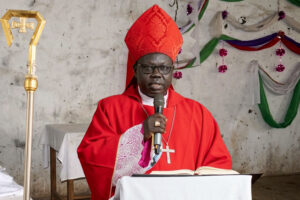
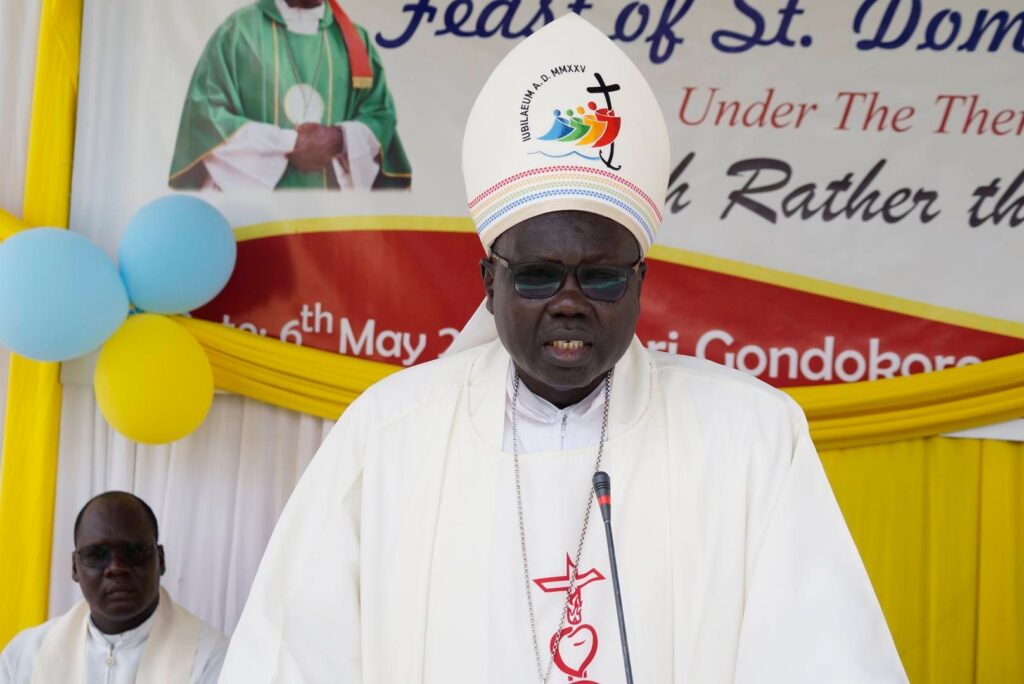
The Catholic Archdiocese of Juba celebrated the Solemnity of Ascension of the Lord and the 60th World day of Social Communications under the theme: Preserving Human Faces and Voices. The mass was officiated by His Lordship Santo Loku Pio, the Auxiliary Bishop of the Catholic Archdiocese of Juba; He encourage people to Hear what the angles said as Christ left, that they should not look up; Christ will return just as they had witnessed him going; nevertheless, the mission given to the Apostles is to go out and preach, baptize all who believed in the name of the Father, and of the son and of the Holy Spirit. this He said is the work given to us; all of us are commissioned.
below is the full text of his homily:
The solemnity of the Ascension signifies the start of the church’s journey. The Church as a moving instrument towards the intended destination to where the father is. With the resurrection, the Church started its long journey to where it belongs and always in the company of the master. That is why it is always said, The Church is Divine, for Christ is its master; and Human for it is entrusted to his Apostles and disciples, to us.
According to St. Augustine, the church recognizes two kinds of life as having been commended to her by God. One is a life of faith, the other a life of vision; one is a life passed on pilgrimage in time, the other in a dwelling place in eternity; one is a life of toil, the other of repose; one is spent on the road and the other in our homeland; one is active, involving labour, the other contemplative, the reward of labour. All of the first life is lived in this world, and it ends here with this imperfect world, while the second life have no end and that was why Christ said to Peter, Follow me.
The Gospel of Mathew (Mt 28:16-20) and the first reading from the Acts of the Apostles (Acts 1:1-11), recounts how Jesus entered the glory of his eternal Father. This feast of the Ascension invites us to look to the earth, to people among whom, we are and called to make present the works of the master. As such, the church of the resurrection is the church that is not to look up, but fully focused on the path and mission to new life as true witnesses. We are given a chance to practice the very charity Christ himself taught us by the help of the Holy Spirit, the teacher and guide.
The 2nd reading from the letter of St. Paul to the Ephesian (Eph. 1:17-23), completes the message that even though we must keep our eyes on earth, we know that human life is not enclosed by it nor does it end within the narrow confines of this world. With Jesus giving the farewell discourse to his disciples as time has come for him to ascend into the new life, after experiencing our own, which landed him on the cross.
The disciples must start moving on with the steps of the new life that he taught them, so that, they too will overcome the cross. In this new journey, the disciples are to receive the Holy Spirit, which will make them more of disciples not only in Jerusalem, Judea and Samaria but to the ends of the earth.
Remember, he told Peter, feed my lambs, sheep; love one another as I loved you. Care for one another, wash the feed of one another, take charge of your calling(vocation) and all that I taught you and you will follow me where ever I go. So, our life is not limited here on earth, we are on move to our Lord’s throne the same way he went. And he said, I will be with you, yes to the end of ages.
As we embrace this mission of being witnesses to the ends of the earth, we must now be able to show the world that Christ is alive in me and so in us. We are called to holiness of life, and so invite others to the holiness as well, ready to preach Christ amidst suffering and death, knowing that the down of the resurrection is awaiting all of us.
The Holy Spirit will help us to reach to the very end of our mission as witnesses to truth, justice, peace, love and care to our fellow humans and to the creation, always producing the fruits of the Holy Spirit. +++
Today will also celebrate, together with the universal people of God the world’s communication day under the theme: “preserving Human Voices and faces”. The Holy Father Pope Leo XIV said, in his message for the 60th world day of social communication and I quote; “Our faces and voices are unique, distinctive features of every person; they reveal a person’s own unrepeatable identity and are defining elements of every encounter with others; faces are Sacred. God who created us in his image and likeness, gave them to us when he called us to life through the word he addressed to us. This word resounded down the centuries through the voices of the prophets, and then became flesh in the fullness of time. We too have heart and seen this word (cf. I Jn. 1:1-3), in which God communicates his very self to us, because it has been made known to us in the voice and face of Jesus Christ the son of God.
Hence; preserving human faces and voices, therefore, means preserving this mark, this indelible reflection of God’s love. The work of communicators, journalists is a work that builds: it builds society, it builds the Church, it makes everyone go forward, provided that it is true. Nevertheless, we need to ask ourselves, are you true? Not only in the things you say, but you inwardly, in your life, you true?” it is a challenge. To communicate what God does with the Son, and the communication of God with the Son and the holy Spirit it must be true. To communicate something divine and of divine nature, the human face and voices. What are you saying about what you see and hear, in you and around you? Are you true?
This celebration of the world communication; is being celebrated at different moment and levels in the history of humanity, with the world still wounded by wars and violence, by shedding of so much innocent blood including our own country. Recently in Lo’bonok, Lirya, Mundri East etc. For the last 13 good years, unnecessary killing of our innocent people has been taking place all-over our country. Most of whom are Women, children’s innocent villagers who don’t know even why they are killed and why they are forced out of their villages to die of hunger elsewhere in the PoCs or the refugee camps and in the bushes. How long should these continue? And why?
Therefore, I would first like to say thank you to all the communication workers who risks their own lives to seek out the truth and to report the horrors of wars and unjust treatment of the human faces. “I wish to remember in prayer all those who have sacrificed their lives in this last year, one of the most lethal for journalists. Let us pray in silence for your colleagues who have signed their service with their own blood”.
I would also want to remember, together with you, all those who are imprisoned merely for having been faithful to the profession of journalist, photographer, video operator, for wanting to see with their own eyes and for trying to report what they have seen. There e many of them; I asked those who have the power to do so, to free all unjustly imprisoned journalists. May a door be open for them too, through which they may return to freedom, because the freedom of journalists increases the freedom of us all. Their freedom is freedom for all of us.
Many do say, that the freedom of the press and freedom of thought be defended and safeguarded along with the fundamental rights to be informed. Free, responsible and correct knowledge is a legacy of knowledge, experience and virtue that must be preserved and promoted. Without this, we risk no longer distinguishing truth from lies; without this. We expose ourselves to growing prejudices and polarizations that destroy the bonds of civil coexistence and prevent fraternity from being rebuilt.
Journalism is more than a profession; it is a vocation and a mission. The role played by Angel Gabriel the heavenly journalist in the holy Scripture. Communicators have the fundamental role for our society today, in reporting facts and in the way in which you report them. We know the language, attitude and tones can be decisive and make the difference between communication that rekindles hope, build bridges and open doors and communications that instead increases division, polarizations and simplifications of reality.
Communication is a peculiar responsibility; it is a precious task. Communications’ tools of trade words and images. But before these are study and reflection, the capacity to see and listencarefully; to place yourselves in the position of those who are marginalized, of those who are neither seen nor heard, and also revive, in the hearts of those who read, listen and look at you, the meaning of good and evil and a nostalgia for the good that you report and by reporting it, bear witness to; and this need courage.
You need to have, and speak of the importance of courage to initiate the change that history demands of us, the change necessary to overcome lies and hatred killing our nations and people. It is true, it takes courage to initiate change which means to have heart; it is that inner drive, that strength that comes from the heart that enables us to face difficulties and challenges without being overwhelmed by fear.
If we fail in this task of preservation, the digital technology threatens to alter radically some of the fundamental pillars of human civilization that at times are taken for granted. Freedom is the courage to choose. Let us take the opportunity today to renew, to rediscover this courage. The courage to free the heart from what corrupts it. Let’s place respect for the highest and most noble part of our humanity at the Centre of the heart, let us avoid filling it with what decays and makes it decay.
We need media literacy, to be educated on the components of information sharing, with well trained and honest information engineers; full of courage, to bring about the communion of enlightened hearts that can feel the face and the voices of others, without turning blind eye to critical issues, complexities and risks.
The Pope concluded by saying; though the digital technology can assist us, let us not renounce our ability to think. Kindly, some journalists end up relaying on the (Al) Artificial intelligence and technology for judgement, that is not enough; Al must be guided by human intelligence not the other way round. Do your works with dedication.
Let us congratulate all our media practitioners, congratulations our journalists, wherever you might be, and may the Lord bless you all.
+In the name of the father and of the Son and of the holy Spirit. Amen. +
Esplanade of Saurimo (Saurimo) Monday, 20 April 2026
Dear brothers and sisters,
In every part of the world, the Church lives as a people who walk as disciples of Christ, our brother and Redeemer. He, the Risen One, illumines for us the path to the Father and with the strength of the Spirit he sanctifies us so that we may transform our way of life in conformity with his love. This is the Good News, the Gospel that courses through our veins like blood, sustaining us on the journey. A journey that has brought me here with you today! In the joy and beauty of our gathering, united in the name of Jesus, let us listen with open hearts to the Word of salvation for it helps us reflect on the motive and purpose for which we follow the Lord.
Indeed, when the Son of God became man, he performed striking miracles in order to manifest the will of the Father: he made light shine in the darkness by giving sight to the blind, he gave a voice to the oppressed by loosening the tongues of the mute, he slaked our thirst for justice by multiplying bread for the poor and weak. Anyone who heard about these works set out in search of Jesus. At the same time, the Lord looks into our heart and asks us whether we seek him out of gratitude or for our own self-interest, with calculation or with love. In fact, he said to those who were following him: “You are looking for me, not because you saw signs, but because you ate your fill of the loaves” (Jn 6:26). His words reveal the designs of those who do not want to encounter a person, but want to consume things. The crowd sees Jesus as means to an end, a provider of services. If he had not given them something to eat, his actions and teachings would not have interested them.
This happens when genuine faith is replaced with superstitious practices, in which God becomes an idol that is sought only when it is advantageous to us and only for as long as it is. Even the most beautiful gifts of the Lord, which are always for the care of his people, become a pretext, a prize or a bargaining chip, and are misinterpreted by those who receive them. The Gospel account, then, helps us to understand that there are erroneous motives for seeking Christ, particularly when he is considered to be a guru or a good luck charm. Even the motivation of the crowd is inadequate: they were not seeking a teacher whom they love, but a leader to applaud for their own advantage.
How different is Jesus’ attitude toward us. Yet, he does not reject this insincere search, but encourages its conversion. He does not dismiss the crowd, but invites everyone to examine what stirs in our hearts. Christ calls us to freedom: he does not want servants or clients, rather he seeks brothers and sisters to whom he can totally dedicate himself. To respond with faith to this love, it is not enough to hear Jesus speak: one must accept the meaning of his words. Neither is it enough to see what Jesus does: one must follow and imitate him. When in the sign of shared bread we see the will of the Savior, who gives himself for us, only then do we draw closer to a true encounter with Jesus, which become discipleship, mission and service.
The admonition that the Lord directs to the crowd is thus transformed into an invitation: “Do not work for the food that perishes, but for the food that endures for eternal life” (Jn 6:27). With these words, Christ expresses his true gift to us: he does not call us to be disinterested in our daily bread, which he multiplies in abundance and teaches us to ask for in prayer. On the contrary, he teaches us the correct way to search for the bread of life, food which sustains us forever. The desire of the crowd receives a much greater and more surprising response: Jesus does not give us food that passes away, but bread that lasts because it is the food of eternal life.
His gift sheds light on our current situation. We can see today how the hope of many people is frustrated by violence, exploited by the overbearing and defrauded by the rich. Consequently, when injustice corrupts hearts, the bread of all becomes the possession of a few. In the face of these evils, Christ hears the cry of the people and renews our history by lifting us up from every fall, comforting us in every suffering and encouraging us in our mission. Just as the Eucharist is the living bread that he never ceases to give us, so too his history knows no end. For this reason, the risen One opens up our lives through the power of his Spirit and removes the end of our history, that is death. Christ lives! He is our Redeemer. This is the Gospel that we share, making all the people of the earth our brothers and sisters. This is the proclamation that transforms sin into forgiveness. This is the faith that saves life!
The Easter witness, therefore, certainly pertains to Christ, the crucified one who is risen, but it also pertains even to us because in him the proclamation of our resurrection finds its voice. We did not come into the world to die. We were not born to become slaves either to the corruption of the flesh or that of the soul: every form of oppression, violence, exploitation and dishonesty negates the resurrection of Christ, the supreme gift of our freedom. This liberation from death, in fact, does not happen only at the end of our days, but every day of our lives. What must we do to welcome such a gift? The Gospel itself teaches us: “This is the work of God, that you believe in him whom he has sent” (Jn 6:29). Yes, let us believe! Today, let us say it together with strength and with gratitude to you, Lord Jesus. We want to follow you and serve you in our neighbor: your word is our rule of life, the measure of truth.
“Happy are those who walk in the law of the Lord” (Ps 119/118:1). This is the Psalm we sang. Dear friends, it is the Lord who marks for us the path for this journey, not our exigencies, nor the current fashion. For this reason, in light of our discipleship the ecclesial journey is a “synod of resurrection and hope,” which Saint John Paul II affirmed in his Apostolic Exhortation on Africa (Ecclesia in Africa, 13). Let us proceed in this wise direction! With the Gospel in your heart, you will have courage in the face of difficulties and disappointments: the way that God has opened for us, never fails. Indeed, the Lord always walks with us, so that we may continue on his path. Christ himself guides and strengthens our journey, a journey that we want to learn to live more and more as it should be, that is in a synodal manner.
In this regard, “The Church proclaims the Good News of Christ not only by the proclamation of the Word which she has received from the Lord, but also by the witness of life, thanks to which Christ’s disciples bear witness to the faith, hope and love which dwell in them” (ibid., 55, 55). Sharing the Eucharist, the bread of eternal life, we are called to serve our people with a dedication that lifts up all who have fallen, rebuilds whenever violence destroys and shares with joy our fraternal bonds. Through us, the initiatives of divine grace bear good fruit especially in adversity, as the example of the first martyr Stephen shows us (cf. Acts 6: 8-15).
Dear friends, the witness of the martyrs and of the saints encourages us and pushes us onto a path of hope, reconciliation and peace, along which the gift of God becomes the responsibility of the headof the household, in the Christian community, in civil society. Travelling together, in the light of the Gospel, the Church in Angola grows according to the spiritual fruitfulness that begins from the Eucharist and continues in the integral care of each person and of the entire people. In particular, the vitality of the vocations that you experience is a sign that you are responding to the Lord’s gift, which is always abundant for those who welcome it with pure hearts. Thanks to the Bread of Life, which we share today, we can continue on the journey of the whole Church, which has as its destination the Kingdom of God, whose light is faith and whose lifeblood is charity.