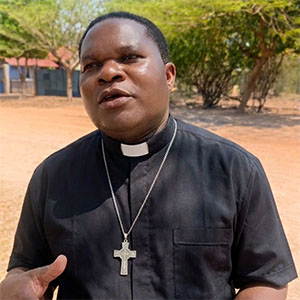
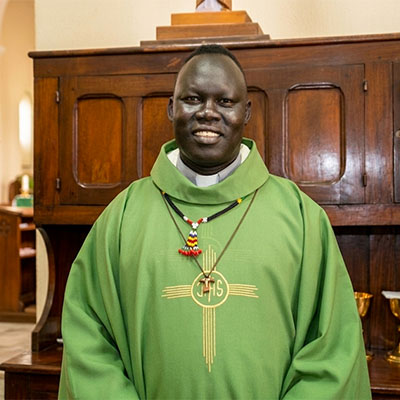
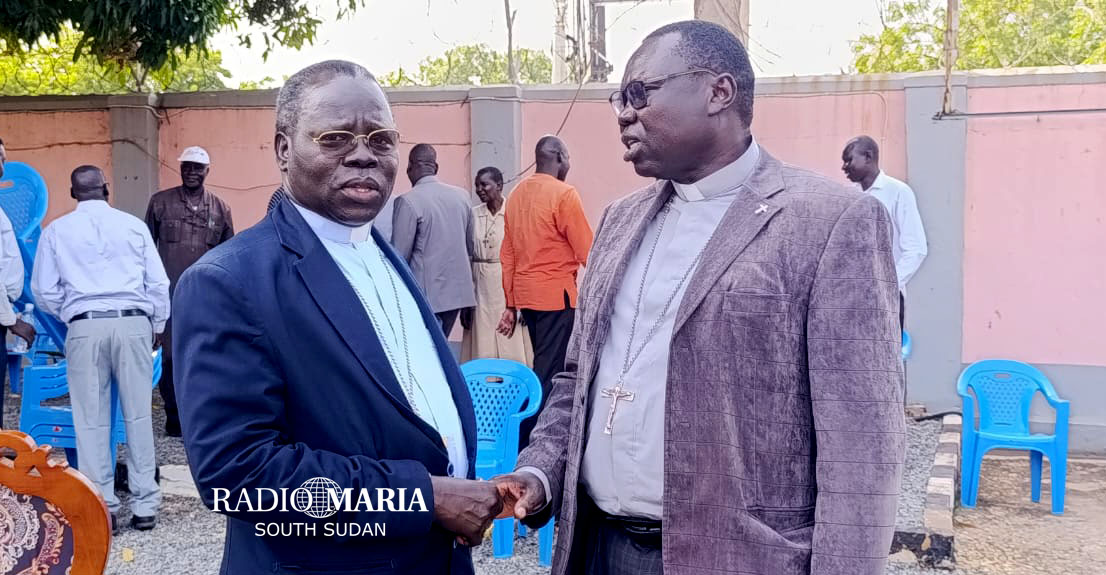
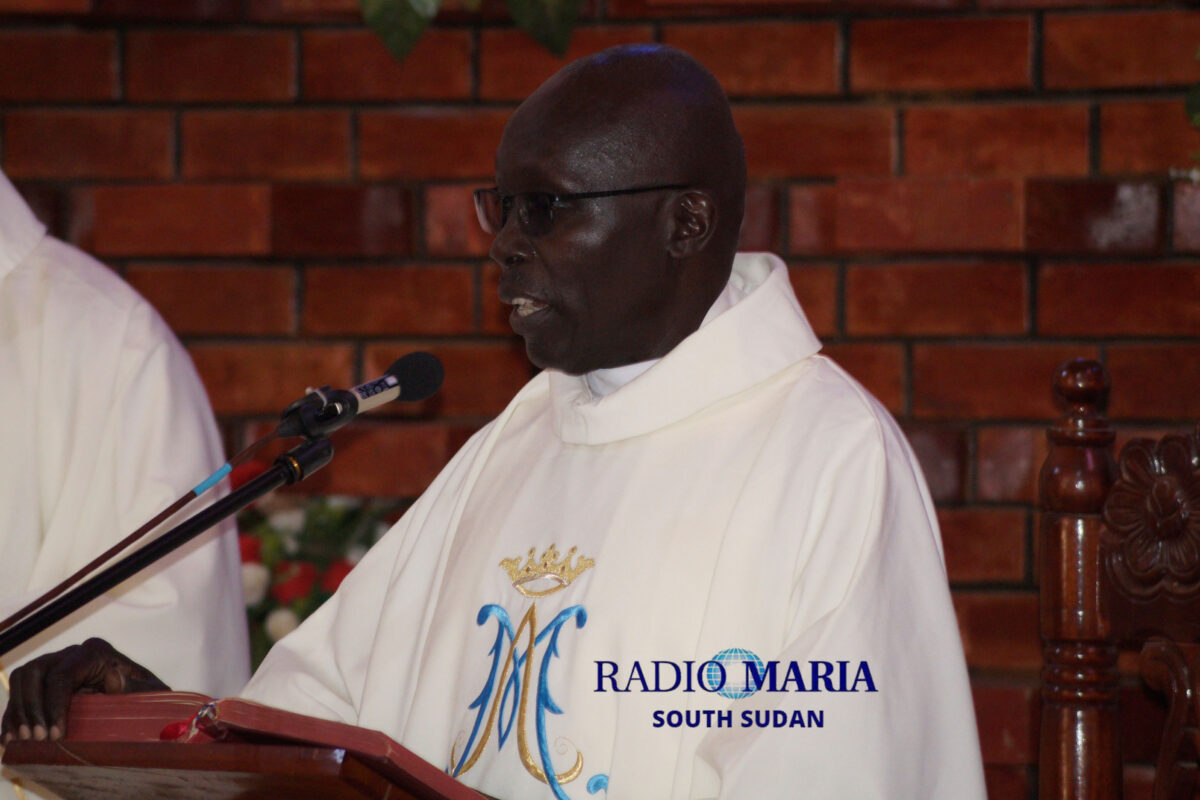
Father Innocent Bizimana, the newly elected Regional Councillor for the newly established East and Southern Africa Region of the Salesians of Don Bosco, has arrived in South Sudan for a key pastoral visit. The tour marks one of his first major initiatives since taking office following organizational updates enacted by the Congregation, which consolidated Salesian ministries across the continent into a vast geographic region.
The expanded jurisdiction now unites nine provinces across 21 nations: Sudan, South Sudan, Ethiopia, Eritrea, Kenya, Tanzania, Mozambique, Rwanda, Burundi, Uganda, Zambia, Malawi, Zimbabwe, Botswana, Angola, Namibia, South Africa, Lesotho, Madagascar, and Mauritius.
Arriving in Juba, Fr. Bizimana underscored that the primary objective of his itinerary is first-hand accompaniment and assessing the welfare of the religious community and its local impact.
“I came to South Sudan to visit the Salesians and to see, through this short visit, how life is going and how our pastoral work is progressing,” Fr. Bizimana shared. “May God bless you.”
Engaging with Local Catholic Media
Fr. Bizimana described the Radio Maria South Sudan, or Catholic radio network, as an indispensable spiritual and social asset for the country as it continues its path toward stability.
“I thank Radio Maria South Sudan for the good work they are doing,” he stated during his address. “It is a big power for the Church, and even for the country. You have to prepare yourselves to give a good message and to strengthen the people.”
A Blueprint for Impact: Prayer and Peacebuilding
The regional leader reminded the broadcast team that their programming carries a profound social responsibility, urging them to keep prayer and the promotion of national unity at the heart of their broadcasting identity.
“The first thing is to pray, because the topic of the radio is to keep the people in peace and to go ahead in the faith,” Fr. Bizimana emphasized, pointing out that the media remains a vital lifeline for fostering hope.
Today, we celebrate the Eleventh Sunday in Ordinary Time, a day that reminds us of God’s profound, unchanging love and his universal call to mission. In the first reading, God offers the people of Israel a wonderful future, proposing an alliance with them after freeing them from slavery in Egypt. He promises that if they listen to his voice and remain faithful, they will become a kingdom of priests and a holy nation—a people set apart and reserved for God. However, over the centuries, this message of hope suffered in transmission. By the time of Jesus, the religious leaders had diminished this grand vision, labeling only those who rigidly followed minutely detailed regulations as “holy,” while casting out the helpless and harassed as “sinners.”
It was precisely for these forgotten people, living without direction or purpose, that Jesus came to bring new hope. As the Gospel reveals, Jesus looks upon the crowds with deep compassion because they are like sheep without a shepherd. In a world where people are often only interested in furthering their own careers and comfort—ignoring the hungry, sick, and oppressed—Jesus acts. He calls and sends out the twelve apostles, a number intentionally linked to the twelve tribes of Israel, to signal the restoration and birth of a new people of God: the Church. The apostles are commanded to bring a radical message of hope: the Kingdom of God is at hand, and a new sort of life is available to everyone.
Our confidence in this new life does not rely on our own strength, as Saint Paul powerfully reminds us in the second reading to the Romans. Paul assures us that our salvation is not based on our good works, our qualities, or our unstable fidelity, but entirely on God’s unchanging love. Human love is weak; we rarely sacrifice for anyone outside our friends and family. Yet, God proved his love by giving his only Son to save us while we were still his enemies and far from him. If God loved us so deeply when we were broken, how much more will he sustain us now that he has justified us? Our sins will never overpower his love; we may abandon him, but he will never abandon us.
This overwhelming grace demands a response, shifting our focus from ourselves to the welfare of others. When Jesus orders his disciples to cure the sick, raise the dead, and drive out devils, he is not just speaking of physical miracles without medicine. Instead, these are vivid images of the spiritual and physical warfare every Christian is called to wage against anything that ruins human life. To undertake this mission, Jesus recommends that we pray. The true aim of prayer is not to convince God to change his mind, but to transform our own hearts from selfishness to generosity, a total conversion of behaviour that allows us to see the world through Christ’s eyes.
In conclusion, every single disciple of Christ, regardless of status, has been entrusted with this vital ministry. We are the modern Church, mandated to go out and proclaim that the Kingdom of God is close at hand through our tangible works of love. May we allow our hearts to be broken by what breaks the heart of Jesus, and may our prayer drive us into the world to fight for the spiritual and physical healing of our brothers and sisters. Amen.
Congratulatory message and blessings from the Cardinal, wishing you grace and blessings.
The feast of the Sacred Heart of Jesus is a significant event in the Catholic Church, often celebrated on the Friday after the octave of Corpus Christi. It symbolizes the immense love and mercy of Jesus Christ, representing his boundless love for humanity. The devotion to the Sacred Heart began with the vision of sister Margaret Mary Alacoque, who received about Jesus’ heart, emphasizing the need for people to return love through prayer and devotion. This feast invites Catholics to meditate on the infinite love of God for each individual, reflecting the profound mystery of the divine love.
The first reading of today, taken from the book of Deuteronomy, stated that “the Lord set his love upon you and chose you.” Referring to the people of Israel, a people sacred to the Lord: a holy people, a people set apart and not contaminated by the worship of false gods. The author of Deuteronomy stresses the notion of election by the covenant with God. Israel was defined as a holy people, and when speaking about being elected, the author of Deuteronomy added that it is not the virtue and strength of the nation that caused the election, but that the love of God for the patriarchs is the main reason for choosing their descendants. (Dt.7:7-8), “It was not because you are the largest of all nations that the Lord set his heart on you and chose you, for you are really the smallest of all nations. It was because the Lord loved you and because of his fidelity to the oath he had sworn to your fathers, that he brought you out with his strong hand from the place of slavery, and ransomed you from the hand of Pharaoh, king of Egypt.” That is why St. John says, “God is love.” Here, St. John does not make any difference between the love of God and the love of neighbor. That our faith in God is made possible and even perfect through the love we have for one another. “Those who abide in love abide in God, and God abides in them.” Through the love of God for us, we are called to bring the people to God, especially those in need, that is the fulfilment of the mystery of the Divine love to humanity, which is the reason for our prayer today. The congregation of the Sacred Heart of Jesus, here in the Archdiocese of Juba, is trying to uphold this mission of love. Loving God in our neighbor. Our society today is totally lost in this beautiful calling, and if we are not careful, we can be converted to their way of life, forgetting the purpose of our existence and mission to the world. The circular world has very advanced means to propagate its agenda of dominance, possession though violence and exclusion. As a result, wars keep emerging with effects of destruction and loss of human lives. Where is the love of God in human society today? It seems hatred is becoming more popular. It is hidden but revealed only to more children; those whose hearts are set on fire for others.
We are because God loved us, and our mission is to love God through his creation. And we are expected to act in God’s love embodied in us, because God abides in us as well. May God accept our prayers for the SHS congregation and bless them with more love for Him and the needy.
His Lordship Bishop Santo Loku Pio welcoming speech
Your Eminence,
The priests, the religious brothers and sisters have been praying for you since the day you left. And all the time keeping you in their prayers but somewhere else they were now becoming more anxious and say Bishop Santo where is the Cardinal? What is happening? so I tried to go around and encourage them that the Cardinal is okay, he’s fine, he’s doing well, he’s taking his medication and the doctors have checked everything, he’s okay but then as time goes then they again say but where is he?
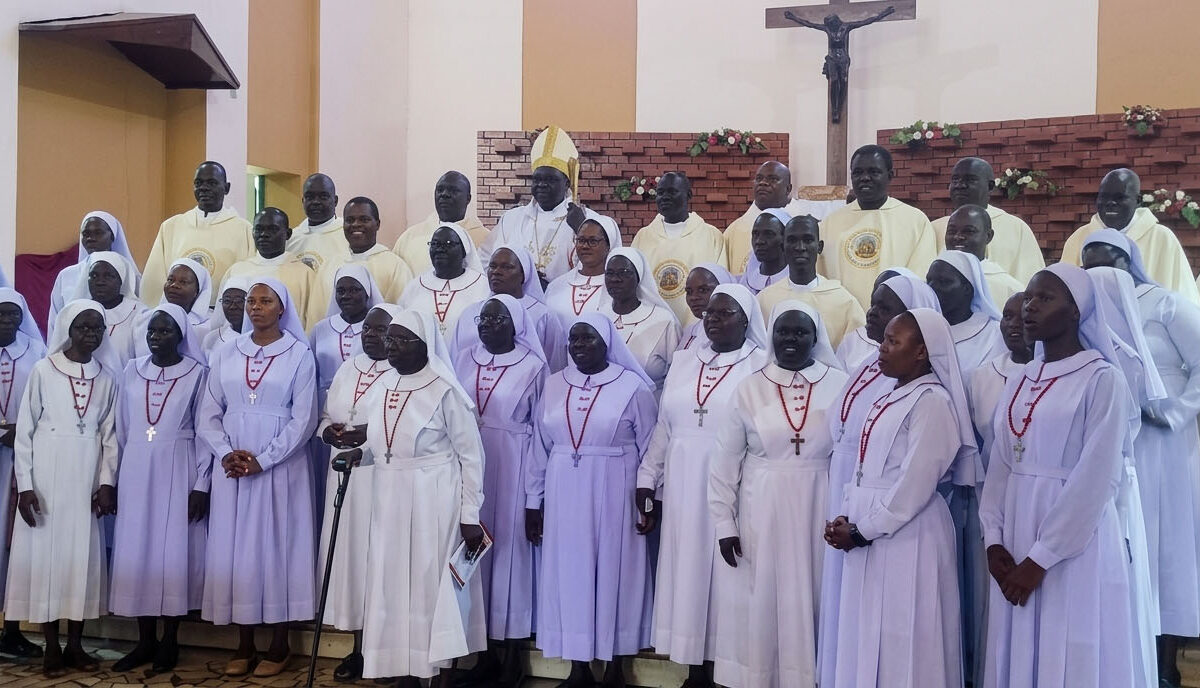
Now I’m happy that you are back. They are also happy that you are back. We have passed this information to all the religious communities and institutions that the cardinal is arriving today. so, this representation of the few leaders and religious brothers and sisters is just to symbolize that you have come back and you are back home. so, we are grateful.
We don’t have much at this stage just to say welcome.
and you bless them, then they go back to continue their duties. So far nobody has run away. They all remain in their assignment. They are happy with the exception of other difficulties like Father Emmanuel Omolo who lost his mother. He is the only parish priest who is out because he has to go for the burial of his mother. But the rest are here, heads of institutions and parishes carrying on their duties happily. We celebrated Easter nicely and all the other celebrations are on and we continue. We are happy that you are back.
I think the Christian community are also happy that you are back because of this anxiety they’ve been asking when is the cardinal coming back? you know when the father of the house is not there the children will ask even if They know, they will still ask “Baba wen?” And you have to keep explaining every day that he is here, he is there, and he is coming and so on. So, this is the situation. Juba is a bit hot, little rain, and the situation is not very much appealing because of the economic situation. People are suffering, there is a lot of hunger.
But there is also a lot of death. People are dying suddenly. There is a lot of frustration because of the situation. And we are trying to encourage our people that things will improve. Let them keep on. A lot of robbery. People are being hijacked here and there and so on. We were this morning with these religious for the traffic police. They are harassing them all over.
Even the castles, the church, even on Sunday the priest going for mass, will be stopped. So, we try to solve those issues. But normally everything is okay. We are managing by God’s grace. So, thank you very much and you are welcome. You can now say a few words, and bless us.
Speech of the Cardinal
Thank you. Your Lordship, Bishop Santo Loku Pio, Reverend Fathers, Reverend Sisters, Reverend brothers, my dear laity people, and my auxiliary staff in the house, thank you very much for this warm welcome that you have accorded to the sick person. You have gone from here struggling to catch up with the life which is sometimes difficult. And I remember when I left you on the Holy Wednesday,
We are already preparing for the Eucharistic celebration. But after consulting many of you, including Bishop Santo and other people, I felt that I was unable to accomplish the Holy Week prayers because I saw all my activities reduced to zero.
and I felt that I should look for a doctor. Indeed, I went because my blood pressure was no more normal. It went up and so as a result my doctor in Nairobi advised me to come because I had been following the doctor in the hospital of Karen, Dr. Dan K. Gikonyo
since 2024 and because of my diabetic condition and also pressure. And so, when I arrived there on Wednesday, immediately I went on Saturday to the hospital and he immediately told me that he’s not going to put me in the award of the common people.
he will take me to his private clinic where I will have to recover, recuperate there. And so, I was taken there, conscious. Remember when I went from here, I went on foot. On my own, I was conscious. But of course, after sometime, the treatment has to take place. And I took almost all this treatment.
The blood pressure could not come down. The whole of April until the 14th of April, it did not come down. Only afterward, then my blood pressure came down. But as you know, the blood pressure always comes with all the effects.
There are many effects that it can cause. And those effects might be affecting the internal organs or the senses and so forth. And so, the doctor say I have to undergo some test. I have to undergo all the tests of the body, the whole organs of the body. And so, the doctor told me, “Your organs are okay.
But there was a problem with my left eye. This left eye of mine had a lot of bleeding inside. And so, it has caused me a lot of pain. This was now a different doctor already.
You know the pressure always affects the senses, the organs. So, one of my organs, this left eye, was affected seriously. And I had to undergo operation. The first operation never succeeded. I remained 14 days and more. The eye here could not open. Then I had to go for a second operation.
by a very specialist doctor from India who succeeded to wash the blood in my eye and cleanse the eye. At least today I am able to see at least how virtually I am able to see some of you. So that is the condition why my health has to take me for a longer time. I think exactly it is already two months and almost ten days when I left from here. However, I would like to thank you. I think I was not going to come out intact like this with my senses, with all my capacity to talk and to say words and to initiate the word because the doctor told me that it was a serious blood pressure which went until almost 240 which was terrible. But however, because of your prayers, your resilient prayers, I am able to come to you here. Thank you to my brother Bishop Santo, who have kept you together, not to get discouraged because many questions were already given him and he has no way of answering because the archbishop disappeared suddenly like that. And so, it is not easy. However, after all this, I have to say to Father Abe, please go home
At least we came here for some 10 days in order to explain to people, especially in the curia, about my condition. My condition was improving and of course I cannot come unless the doctor tells me that, okay, now you go. You know, it’s always good to respect the authority of the doctor.
a doctor or somebody who is responsible for you. So, the doctor kept me all this time there. He told me that you cannot go, otherwise a lot of things can happen to you which are not okay. And so finally when we went, the last review, especially for the eye, the last review was recently on the 19th, which they postponed it until Friday.
And so, we have to meet the doctor on Friday. And for that review, we told me that, okay, now your eye is improving. So, you can go home. We will come and meet on the 8th of July. So, the condition, the doctor is still keeping me in Nairobi. He does not like to release me. So,
But all in all, I would like to reiterate this, that your prayers have helped me. If I have come out of the hospital now intact like this, it is because of you all. Each one of you.
Every time, especially my priest, every time you pray the Eucharist, you mention me and God has really accepted your prayers and your individual prayers. And may you continue to be like that. The church is not only the bishop. All of us together are the church. The church that is capable of loving one another
And with your warm welcome, I feel that I have people behind me. Even if something happens, the church will continue.
because the church is not the church of Cardinal Stephen, it is the church of Christ, which is able to live and be strong because all of you are committed in doing your own tasks as in different tasks that you do in the church. And so, all in all, let us thank God for this great moment and let us thank all of you for this important welcome, warm welcome. I thank you for your prayers. May God bless you. May God keep us together, united in love so that we can continue to serve him as long as he gives us this energy that we take sometimes for granted, you know. I have never had a situation like this
two months of sickness. I have never heard that this is the time. But as I know, I learned from my Lord, the Lord said, this sickness leads to the glory. When Lazarus got sick, he said the sickness of Lazarus will lead to the glory of God. So, each one of us who suffers in sickness, it always leads to the glory of God. And I think with all this, we say God is still with us and He continues to push us together and to work together, especially all of you who are responsible in different institutions, the parish priest,
different departments and all our high institutes. I thank you for having come to welcome me, and may God continue to bless all of us. Thank you.
++ In the name of the Father, and of the Son, and of the Holy Spirit. ++ Amen.
Lord our father, we thank you for the gift of health.
We thank you for the gift of energy that you continue to give each one of us in order to serve you in all our different capacities. As we live, we always have this setback in our health, but you always come to cure us. You are the first doctor who walks through the hands of the doctors so that we can still acquire a better health.
As we thank you, we remind ourselves of the importance of the angels who accompany us, especially angel Gabriel, angel Michael, angel Raphael, who always protect us from the adversities. Bless all these people who are in need of better health and better conditions of their life.
Bless our country and bless all our religious people so that they continue to persevere in this life.
We ask this through Christ our Lord.
Our Father, who art in heaven, hallowed be thy name. Thy kingdom come, thy will be done on earth as it is in heaven. Give us this day our daily bread and forgive us our trespasses as we forgive those who trespass against us. And lead us not into temptation but deliver us from evil. Amen
We ask also our mother who accompanies us always, as we say,
Hail Mary Hail Mary, full of grace, the Lord is with thee. Blessed art thou among women, and blessed is the fruit of thy womb, Jesus. Holy Mary, Mother of God, pray for us sinners, now and at the hour of our death. Amen.
On this important feast, the solemnity of the most holy body and blood of our Lord Jesus Christ, our children are telling us the insight of our faith: that Jesus may stay with us, that Jesus may make us holy, and that Jesus may continue to teach us about his presence in the Holy Eucharist. His presence—fully present in the Eucharist, in his body, in his blood, soul, and divinity—this is our faith. This is the faith of the Catholic Church. This is the faith that, after this, we are going to renew our baptismal promises in, here in the presence of our Lord Jesus Christ, fully God and fully human, for the salvation of our souls.
The sequence that we just heard being sung in Latin was giving us the meaning of this solemnity today. It is telling us that, “Lord, the angel’s food is given to the pilgrim who have striven.” For all those who strive, the angel’s food will be given.
Do you remember when the Canaanite woman came to Jesus and was pleading with him? The disciples came and spoke, and Jesus noted how Gentiles were called “dogs” by those outside the firstborn children of God, meaning the food of the children should not be given to them. Now, in this sequence, we are given a new beginning, a new birth, and a new status so that we may be called children of God through our baptism.
The sequence tells us that truth, “the ancient types fulfilling, Isaac bound, a victim willing.” Isaac was a type of Jesus. When Isaac was to be sacrificed, he was the only son of his father Abraham, and God asked for him to be offered. But then God provided a ram instead of Isaac, because Isaac was not the ultimate fulfillment of the Old Testament. Jesus is.
And when the people of Israel came out of Egypt, God, even in their stubbornness, gave them the bread of the angels to eat. That is why Moses said when he spoke to the people in the first reading, taken from the book of Deuteronomy 8:2-3 and 14-16: “You shall remember all the way which the Lord your God has led you these 40 years in the wilderness, that he might humble you, testing you to know what was in your heart, whether you would keep his commandments or not.”
Did they keep it? They were falling every time, but the Lord kept his love, kept his commandment, and gave them the food of the angels that they may be led. For their stubbornness, they were punished for 40 years to reach the promised land, but the Lord kept his covenant.
For our sins and for our stubbornness, the Lord fulfilled his covenant by bringing to us his only begotten Son, our Lord Jesus Christ. Today, in the Gospel of John, Jesus is telling us: “Truly, truly…” And when he says “truly, truly,” he is affirming exactly who he is. Jesus told us that he is the way, the truth, and the life. If today, here in St. John’s Gospel, he is repeating it truly, “…Truly, truly, amen, amen, listen carefully, my dear brother, my dear sister—you who have been drawn to become a son and a daughter of God. And Jesus is telling us today: ‘Truly, truly, I say to you, unless you eat of the flesh of the Son of Man and drink his blood, you have no life in you.’ Does it sing within you? Does it make sense to you today that on this day the Catholic Church should celebrate the most holy body and blood of our Lord Jesus Christ?
Does it hit you that as you are made sons and daughters, you are called to be part of the people who are partaking of his body and blood? Do you need new life within you? Then on this day of the celebration of Jesus’ presence in the Holy Eucharist—body, blood, soul, and divinity—let your light shine. May the words just now said by our children renew your faith that Jesus may stay with you. By partaking of his body and blood, may he make you holy. Always, as you come to church, may he continue to teach you about the things of heaven, because this food—his body, his blood—is food for our journey, our journey to heaven.
My dear brothers and sisters, the Holy Eucharist has been the mark of our Christian faith. Even from the Old Testament, we see the foreshadowing, and we know that the Christians of the New Testament, from the Acts of the Apostles, gathered to break bread. And as they gathered to break bread, they adored Jesus. They renewed their faith and they called upon him to remain with them so that they might be evangelizers, going out to preach Him who is present in the Holy Eucharist.
Our Christian identity has undergone a number of trials. Christians of old were even stopped from celebrating the Mass. I want to draw your attention to this: if they who went before us held the Mass so dear, we, the Christians of today, on this solemn day of the body and blood of our Lord Jesus Christ, have to say, “Jesus, renew my faith in you, that I may carry the spirit of all the saints, and especially the martyrs who died carrying you.”
One of the best examples we can give here is Saint Tarcisius. In the third century, he was a young man. If we were to count his age, he would be the age of these children in the choir here, these altar servers, these crusaders. Because the elderly were put in prison for the very reason of the Holy Eucharist—for their faith in the Holy Eucharist—this young, energetic acolyte was sent to take the Holy Eucharist to those in prison. Saint Tarcisius did this every Sunday.
Then, one Sunday, he was caught. He was caught by pagan soldiers, a pagan group of people, and was threatened to surrender the Holy Eucharist—to surrender Jesus, in whom he had utmost faith. What he did was grab Jesus, hold Him to his chest, and say, “I will never surrender him.” And because of that, they killed him. They killed him while he was holding the Eucharist. Today, because of his immense love and zeal for the Blessed Sacrament, Saint Tarcisius is honored as the patron saint of altar servers and acolytes. Brothers and sisters, what we see here simply as a piece of bread, our faith tells us is something far greater. Every time we celebrate the Mass on this altar, God is actively at work, performing a continuous miracle so that we—even as sinners—might partake of his body and blood. He does this so that we might become his brothers and sisters, because he said, “I’ve shown you everything. I’ve told you everything that I learned from my father.”
I urge you and plea with you: do not take up the arguments of those who questioned Jesus, asking, “How can this man give us his flesh to eat?” Jesus answers them directly, saying, “Truly, truly, if I do not give you my body to eat and my blood to drink, you will have no life in you.” May these words resonate deep within us today.
Today, we also remember all those who have died for this truth, including the Uganda Martyrs. They died because they believed in the Eucharist. They died because they believed in Jesus and refused to part ways with him. Whether we are alive or dead, we belong to the Lord. When the time comes, let us defend him. Let us open our mouths and our lips to boldly say, “I believe in him.” This is why the Catholic Church teaches that wilfully missing Sunday Mass is a grave sin.
Let us recall one of the most powerful testimonies from the early Church. During the brutal Roman persecution under Emperor Diocletian, a group of saints known as the Martyrs of Abitene in North Africa were arrested for gathering secretly. When the Roman proconsul demanded to know why they disobeyed the imperial decree, they answered with words that should echo in our hearts forever: “Sine dominico non possumus”—”Without the Lord’s Day, we cannot live.” They chose to be murdered and martyred rather than live a life without the Sunday Eucharist.
We must look at our own history and devotion. When we were in Khartoum, almost no Christian remained at home on Sunday. Christians who were forced to work on the Sabbath found the courage to defy those laws, saying, “I will gladly leave this job if you stop me from coming to the Sunday celebration.” Yet today, we are a free nation. We are citizens of South Sudan. We craved to have our own country, and the Lord graciously gave us this land. But tragically, today, a number of us are denying Sunday worship. A number of us are failing to honor Jesus in the Holy Eucharist, even while calling ourselves Catholic Christians. May the bells continue to ring in our ears until we come out to pray: “Jesus, stay with me. Jesus, make me holy. Jesus, teach me always.”
I want to conclude by sharing a beautiful message about Blessed Carlo Acutis, an Italian youth who died of leukemia in 2006 at the tender age of 15. He was a young man who thoroughly understood modern technology. At that young age, he used his computer skills to document and teach the world about Eucharistic miracles, cutting across oceans from Lanciano to South America. Knowing he was close to death, his famous saying was, “The Eucharist is my highway to heaven.” Brothers and sisters, let these children in our choir and our altar servers remind us of Carlo Acutis’ beautiful witness.
Let us learn a profound lesson from this young saint, whose spirit is mirrored in the presence of our children today. Dear brother and sister, love the Eucharist above all else—even above yourself—because it is Jesus Himself. Attend Mass regularly and faithfully. Every time you enter the church doors, let your heart beat with excitement because you are standing face-to-face with the God who redeemed you from your sins. Spend quality time in Eucharistic adoration; we host adoration here every Thursday, yet some of us rush away instead of rushing toward Him.
May this Sunday entirely renew our faith in our Lord Jesus Christ. Let us use our modern technology to evangelize his presence, just like Carlo Acutis did. Strive for holiness in the midst of your ordinary daily life, knowing that your Lord lives. Carry this sentence with you and repeat it always: The Eucharist is my highway to heaven.