Parishes in the Archdiocese of Juba. Click the links below to read more info.
1: All Saints- Rajaf
Historical Background:
All Saints’ Parish Rejaf East is the first and the oldest Parish of the Catholic Archdiocese of Juba. As the monument of faith, it originated in 16th July 1919 as a result of Missionary activity of the Comboni Fathers, Brothers and Sisters. And by history, it is the mother church of the three dioceses:
The Catholic Archdiocese of Juba, the Catholic diocese of Torit and the Catholic diocese of Yei. All Saints’ Parish Rejaf is bordering St. Vincent de Paul Parish at Gumbo to the North and St Matthew’s Parish at Lo’bonok to the South. It is bordering with St. Joseph the Worker to the East and St. Theresa’s Parish to the West.
STRUCTURE OF THE PARISH
The Parish consists of three centers.
-
-
- Main Parish Church Centre: Holy mass in Bari
-
- Nativity Chapel in Kit: Holy mass in English
- Gwuduge Outreach, which is still to be developed into a chapel.
-
COMMUNITIES WITHIN THE PARISH
-
-
- All Saints Parish Father’s Community.
-
- Sisters of Charity of St. Jeanne Antide Thouret Community.
-
- Being in hope Orphanage Community.
-
- St Lawrence’s Minor Seminary Community.
-
- Apostles of Jesus Community.
-
- Brothers of St. Martin de Pores’ Community in Kit.
- Good Shepherd Peace Centers’ Community in Kit.
-
INSTITUTIONS WITHIN THE PARISH
EDUCATIONAL INSTITUTIONS
-
-
- All Saints’ Kindergarten
-
- All Saints’ Basic School (Rejaf East). It was established in 1922.
-
- St. Lawrence Minor Seminary of Catholic Archdiocese of Juba.
-
- Apostles of Jesus Academy Secondary School.
-
- Brother Augusto’s Memorial Primary and Secondary Schools.
- Good Shepherd Peace center.
-
HEALH INSTITUTIONS
-
-
- Primary Health Unit run by the Community of Rejaf
- Primary Health Unit run by Brothers of St. Martin de Pores in Kit.
-
2: St. Vincent De Paul- Gumbo
Historical Background:
Saint Vincent De Paul Parish Gumbo is one of the six parishes of the Eastern Deanery of the Catholic Archdiocese of Juba – South Sudan. It is bordered by All Saints parish Rejaf in the South West, Saint Joseph the worker parish Lirya in the South East, Holy Cross parish Kondokoro and Saint Thomas the Apostle Parish Mangalla in the North and St. Mathew Parish in Lobonok.
The parish of St. Vincent de Paul was formerly one of the substations of All Saints Parish of Rejaf. The parish was under the pastoral care of Fr. Anania Ladu Befo, Fr. John Ochaya and Fr. Ambrose Ladu before the Salesian priests. The first Salesian parish priest was Fr. Dominic PD followed by Fr. David Tulimelli and now is Fr. George Kainikunnel.
Parish was declared as an official Parish in the year 1996 and the patron saint of this parish was St. Stephen. However, the parishioners were not comfortable with St. Stephen as their parish patron due to the fact that this feast fell just after Christmas, and it would be difficult to celebrate it very grandly. In response to this, Archbishop Paolino Lukudu Loro changed the Parish Patron from St. Stephen to St. Vincent de Paul.
St. Vincent de Paul Parish was inactive for a long time due to the constant threats and attacks from unwanted elements during the years of conflict. People living in Gumbo were very few as many moved to Juba due to insecurity. During the initial years, there were just two or three families around the parish Church. After visiting these families and making some contact with other communities in the locality, the parish began to grow in number with time.
The first mass in the parish took place on a Sunday in November 2006 during which we celebrated with two young persons and a few Children. The people started to come more and more on each of the Sundays that followed. It took some time and a great deal of effort to build up this Parish community to what it is today.
Parish has three Masses on Sundays in Bari, Arabic, and English. From the 8th
December 2013 the second mass in Arabic became a regular. The parish looks after the seven outstations that have regular Sunday celebrations and other animations. Responding to the need that arose following the civil violence in 2013, the parish also caters to the IDPs with means of sustenance and by providing educational facilities for the IDP children. There are four Primary Schools attached to the parish and its outstations where education and pastoral services are offered on daily basis.
The youth of the parish are taken care of for their intellectual, spiritual and physical formation through the regular oratory that functions in the compound.
We have weekday masses on Monday through Saturday. This is an opportunity given to people to attend Holy Mass every day of the week.
Population: Parish territory has an estimated population of 35,000. Catholic faithful are about 5,500. Weekly attendance for Holy Mass is estimated about 1,800.
Main Tribes: The main tribes within the parish consist of Bari, Lulubo, Lokoya,
Latuko, Dinka, Peri and Acholi.
The Parish Main Center and 7 Sub-Stations: St. Vincent de Paul Parish -Gumbo, St. Dominic Savio Chapel – Mori, situated besides the Nile River, 10 km from the main Parish, Mafao situated on the way to Bor, 14 km from the main Parish, St. Luke Chapel in Bilingyang situated on the way to Bor 25 km from Parish, Mary Help of Christians Chapel in Mogiri situated on the way to Bor, 30 km from Parish, St. Don Bosco Chapel in Nesitu Situated on the way to Torit, 20 km from Parish, St. Francis Chapel in Sherikat, Good Shepherd centre in Sherikaat and Jebel lemon centre are given chaplaincy by the Salesian Community. There is also a catholic community gathering regularly for prayer since a year in highland.
Pastoral agents of Evangelization: Salesian priests and Brothers are nine in number coming from India, Kenya, Tanzania and Vietnam. Salesian Sisters are four in number hailing from Kenya, Philippines, South Sudan and Lebanon. Caritas Sisters of Jesus are four in number coming from Vietnam, Japan, South Korea and Brazil. Besides several diocesan and religious priests, do support the parish in the pastoral
Work regularly. The religious personnel accompany the priests to various chapels for Sunday masses.
Catechists: Parish has 25 Catechists. Some of them are full-time and others are part-time volunteer catechists. The Catechists are selected and proposed by the faithful. Some of them have received training from the diocesan Palica and Comboni missionaries in the past. Unfortunately, most of them are not married in the Church. The Catechists teach the Catechism/Sacraments to the people, mainly Preparing candidates for baptism both adult Catechumens and parents for infant baptism, Holy Communion and Confirmation. Conduct the liturgy of the word on Sundays in the absence of priests, conduct funerals and burials, and other prayer services when needed. The Materials that they use for catechising are ‘My Catechism’ in both Arabic and English, the Bible, posters and Catechism of the Catholic Church. Some of the challenges are Catechists have a low standard of education. Some of them cannot read and write much. Lack of teaching materials for easy orientation of Catechumens. The parish insists with the Catechists on good manners and behaviour that witness to the gospel. In general, Catechists and the administration of the Parish Priest and the rest of staff are in a full co-operation.
Parish Time Table
Sunday Masses
| Location | Time | Language / Activity |
| Gumbo (Main Church) | 7:00 AM | Mass in Bari |
| Gumbo (Main Church) | 9:00 AM | Mass in Arabic |
| Gumbo (Main Church) | 11:00 AM | Mass in English |
| St. Francis Chapel | 8:00 AM | Mass |
| Mori, Mogri, Belinyang & Nesitu | 10:00 AM | Mass |
Weekday Masses (Monday to Friday)
| Day | Time | Activity | Location |
| Monday – Friday | 6:30 AM | Mass in English | Gumbo |
| Monday – Friday | 5:30 PM | Rosary | Gumbo |
Friday Special Activities
| Time | Activity |
| 5:00 PM | Rosary |
| 5:20 PM | Adoration |
Saturday Activities
| Time | Activity | Location |
| 3:00 PM | Mass | Mafao |
| 5:00 PM | Rosary and Confession | Gumbo |
| 5:20 PM | Novena to MHC / Mass (English) | Gumbo |
| First Saturday of the month | Catechists Meeting | Gumbo |
Regular Parish Meetings & Activities
| Meeting / Activity | Schedule |
| Missionary Group Meeting | Last Sunday of the month |
| Altar Boys Meeting / Practice | Three times a week (Tuesday, Thursday & Saturday) |
| Legion of Mary Meeting | Sunday after all Masses |
| Parish Council Meeting | 1st Sunday of the month |
| Youth Evaluation Meeting | Every last Sunday of the month |
| Youth Office Visits | Animates parish chapels |
| CWO (Catholic Women Organization) Meeting | Once a month |
| SCC (Small Christian Communities) Meeting | Wednesday & Saturday |
3: St. Theresa’s Cathedral- Kator
Introduction:
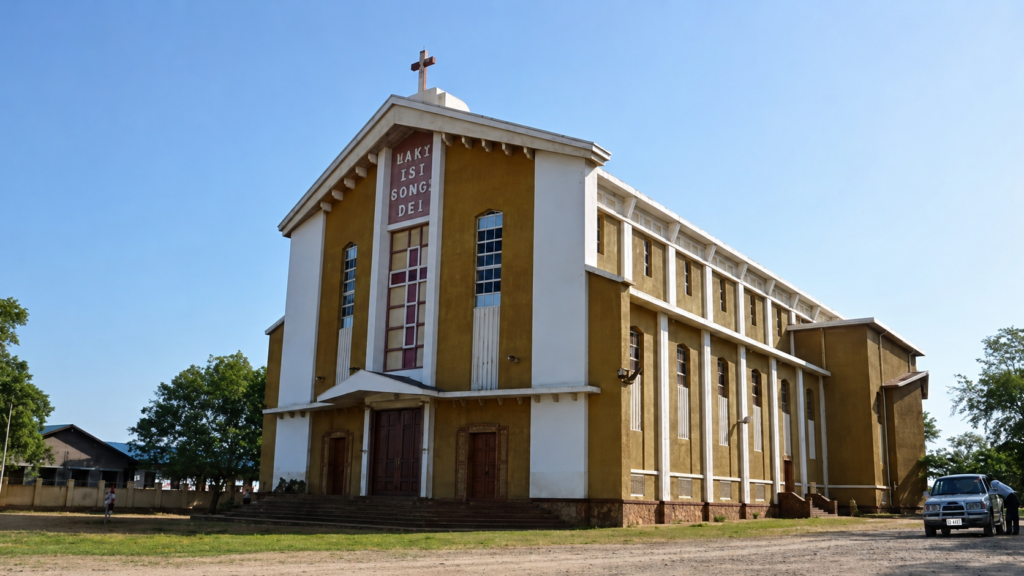
St. Theresa of the Child Jesus is the seat of the Archbishop of the Catholic Archdiocese of Juba. Its foundation was laid in 1959 and was inaugurated on 29 April 1962.
It is bordered by St. Joseph’ and Holy Rosary Parishes to the North, St. Kizito Parish to the Northwest, Holy Trinity Parish to the West, St. Vincent and All Saints Parishes to the East, and the Catholic Diocese of Yei at Kaju Koji, to the extreme South.
Up to date, the Cathedral Church has hosted four Bishops, two Auxiliary Bishops, two Monsignors plus a series of Pastors: Bishop Sisto Mazzoldi, Archbishop Ereneo Win Dut, Archbishop Paolino Lukudu Loro and now Stephen A. M. Cardinal Mulla. Auxiliary Bishops are Paride Taban and Santo Loku Pio. Plus, Monsignors Silvestro Laharanya and Paolino Dogale.
Vision:
A prophetic and self-sustaining family of God, evangelizing peoples in the Archdiocese of Juba.
Mission Statement:
To teach, sanctify and serve the people of God through proclamation of the Word of God, and integral human development.
Core Values:
Guided by the Spirit and based on God’s Word and the Teaching of the Church, we advocate for:
- Holiness
- Stewardship
- Love
- Commitment
- Justice and Peace
- Solidarity with the Poor
- Life rooted in Faith
- Unity of Purpose
ESTIMATED POPULATION:
We are yet to establish the population of the area from Kator Quarter Council. However, we do base our estimate on the regular and annual attendance during Sunday, Easter, and Christmas Masses.
During last year’s Christmas and New Year Masses, our Health & COVID-19 Unit distributed over 15,000 Face-masks prior to celebrations of Masses in the main Parish and Chapels.
Hence, we estimate the parish population to over 20,000 catholic faithful.
Parish Church, Chapels & Centres:
Our parish encompasses 10 chapels, each serving as a vital centre for worship and community activities. This year, two of our chapels received approval toward becoming parishes in the future. This approval signifies a recognition of their growth and the vibrant faith communities they have fostered. We are committed to supporting these chapels as they transition into fully established parishes.
| Chapel / Centre Name | Location | Languages Used |
| St. Theresa’s Cathedral (Main Church) | Kator | Bari, Arabic, English, and Children’s Mass |
| Holy Family Eucharistic Centre | Nyakuron | Azande, English, Arabic |
| Assumption Eucharistic Centre | Kalibala | Avukaya, English, Arabic |
| St. Ignatius Chapel | Kalibala | Lingala, English, Arabic |
| St. Vincent de Paul Chapel | Lulugu One | Bari, English, Arabic |
| St. Peter’s Chapel | Jondoru (Kor-romula) | Bari, English, Arabic |
| St. Daniel Comboni Chapel | Ghiada Area | Dinka, English, Arabic |
| Kolye Chapel | Kolye Village | Bari, Arabic |
| Police College Chapel | Kolye Village | Bari, Azande, Dinka, Arabic, English |
| St. Agnes Chapel | Nyori Village | Bari, Arabic |
| Khor Wolyang Chapel | Khor Wolyang Residential | Bari, Arabic |
Catholic Institutions within the Parish:
List of church institutions functioning within our jurisdiction.
Curia & Congregations [ 06 ]
- Curia of the Catholic Archdiocese of Juba (temporarily)
- Clergy House (Centenary)
- Brothers of St. Martin de Porres, Generalate
- Sacred Heart Sisters
- Daughters of St. Paul
- Ursuline Sisters
Catholic Schools [ 06 ]
- Theresa’s Primary School
- Theresa’s Kindergarten
- Josephine Bakhita’s Primary School
- Daniel Comboni Secondary School
- Vincent Primary School
- Vincent Vocational School
Catholic Health Centres:
- Sacred Heart PHU
- Three Angels PHC & Maternity
4: St. Joseph’s Parish - Juba
To be updated…..
5: Our Lady of Holy Rosary- Buluk
Historical Background:
Name of the Parish: Our Lady of the Holy Rosary Catholic Parish, Buluk, Catholic Arch Diocese of Juba. The Parish borders: St. Joseph, St. Theresa, St. Kizito and Sacred Heart Kworijik.
Brief Historical Narrative of the establishment of the Parish: The center started with a Catechism Class under a Neem Tree. With house-to-house pastoral visits, many used to come together under that Neem Tree to Pray on Sunday. To cover the increase of faithful they began to pray in one of the Classrooms in Buluk Primary School, which shortly became too small thus, they had to move to Sadaka Primary School. Being accused of noise the faith community moved on to the present venue and put up a Temporary structure covered with grass. With a very strong spirit of generosity and commitment, they put up the present Church structure. Slowly by slowly we managed to finalize on the construction by putting up the ceiling board and new sanctuary last year 2023.
Declared a Parish on 8th April 2018 by the late Arch Bishop Emeritus Paulino Lukudu Loro. This was done after we had provided the area map of the sub-Parish, Statistics of the families and the financial position of the sub parish.
Core Values:
-
-
- Sanctity and Holiness through the Sacraments of the Church.
-
- Ministering the Word of God.
-
- Building of Communities thru’ Small Christian Communities.
-
- Empowerment and guidance of the Youths thru’ Workshops and seminars.
-
- Monthly Recollections on specific topics.
- Catechism and Adult Formation.
-
Lay Apostolate Movements:
-
-
- Legion of Mary
-
- Catholic Charismatic Renewal
-
- Divine Mercy
-
- Precious Blood Devotees
- St. Vincent de Paul group
-
6: St. Kizito’s Parish – Munuki
Historical Background:
St. Kizito’s Parish is one of the eight (8) Parishes of central deanery of the Catholic Archdiocese of Juba. Started as a chapel under St. Joseph’s Parish in early 1983 by the late Rev. Fr. Philip Ottorino Sina MCCJ (Comboni missionary Father) and later it was declared a parish in 1987 by H.G. the late Emeritus Archbishop of Juba Paolino Lukudu Loro MCCJ. The Apostles of Jesus Missionaries administered the parish after the Comboni Missionaries until 1997 when the Diocesan priests took over.
Location:
St. Kizito’s Parish is located in Western Juba, with HQs in central Munuki Block B, plot number 1705 with an area of 23,450 square meters. St. Kizito’s Parish borders Holy Rosary Parish Buluk to the East, Mary Queen of the Apostles Parish Gurei to the West, Sacred Heart Parish Kworijik to the North, and Holy Trinity Parish Nyakuron to the South. We do not have the precise statistics, but by guesstimate, St. Kizito’s Parish could be the biggest in Central Deanery in terms of population density. It covers Munuki, Suk Hajar, Mauna, Dar Es Salam, Hai Tarawa, Rock City, Gudele, Lokwilili, Kugi, Timondi, Joppa, Hai Referendum, Mia 7, and Eden, part of Kameru, Nyarkenyi and Part of New Site.
Chapels/ Prayer Centres:
St. Kizito’s Parish has fourteen (14) Chapels and Prayer Centres: St. Augustine, St. Bakhita, St. John the Baptist, Holy Family, St. James the Apostle, Gudele One, St. Stephen, Kugi, St. Daniel Comboni, Divine Mercy, Komiru, Nyarkenyi, St. Paul’s Chapel (Major Seminary) and St. John Paul II (Referendum), Nyarkenyi and Kameru Prayer Centres. The detailed information about the chapels and prayer centres are listed below. Out of these fourteen Chapels, six are Eucharistic Centres: St. Augustine, St. Bakhita, St. John Paul II, Holy Family, St. Anthony of Padua and St, Stephen.
7: St. Elizabeth of Hungary Parish
To be updated…..
8: Holy Trinity Parish – Nyakuron
General Information:
Holy Trinity Parish was created in 2014 during the feast of the Most Holy Trinity by his grace late archbishop Paolino Lukudu Loro and is in Nyakuron West, between Custom and Rock City, off Yei road.
We have no precise information of the population nor the number of catholic, but we can estimate 80000 and 100000, considering that within the parish territory we have the IDP camp that hosts more than 50.000 people.
The Parish borders with St. Kizito and Mary Queen of the Apostles in the site of Gorom, Wundruba and Lanya, then with the Diocese of Yei.
Under our parish, we have:
-
-
- Holy Spirit Chapel
-
- Moroyok and Holy Spirit Chapel the faithful are of many different tribes and the language used is classical Arabic and English mainly.
-
- Immaculate Conception – Jebel, the faithful are all Dinka and some Anyuak, they cannot speak local or classical Arabic and know little English, except the catechists who are very learned people.
-
- St. Daniel Comboni – in IDP camp 3, Nuer language
-
- St. Stephen – in IDP camp 3, Nuer language
-
- St. Mathias – in IDP camp 3, Nuer language
-
- All Saints of Africa – in IDP camp 3, Nuer language
-
- St. Mary – in IDP camp, 3 Nuer language
-
- Digala – Bari
-
- Gangi – Bari
-
- Kulipapa – Bari
-
- Bungu – Bari
-
- Kagwada – Bari
-
- Gorom the new community which is for those people who have come from Khartoum especially Darfur few are catholic but most of them are other churches.
- Amadi Chapel. This Chapel very new, they are from St. Matthias IDP. They cannot live in IDP forever and difficult so they get place in Amadi. That Chapel will be give Petron name is St. Rafael Chapel, but it will be report to Cardinal Stephen to know about it.
-
9: Mary Queen of the Apostles Parish – Gurei
Historical Background
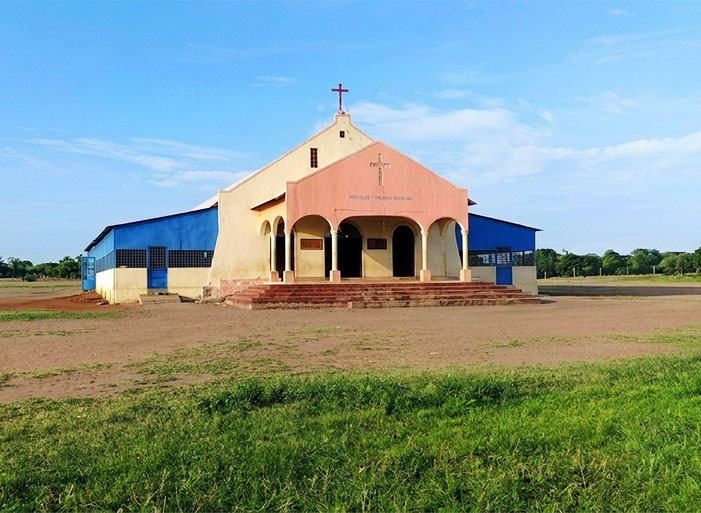
t was in the year 2012 MMI fathers took charge of Gurei chapel led by Rev.Fr. John Britto MMI and thereby we started to build the church and construct the Presbytery for Missionaries. On the 14th of September 2012, the Vicar General Rev.Fr blessed the foundation of the church. Nicola Kiri and thanks to Fr. James Pitia for his guidance during the initial stages of the construction of the church building. In the year 2014, Mary Queen of the Apostles Parish was officially declared as New Parish by His Grace Archbishop Poulino Lukudu Loro and it became 13th Parish in the Catholic Archdiocese of Juba. This Parish was officially handed over to MMI Fathers and was inaugurated on 22nd August 2014 by the Auxiliary Bishop His. Lordship Santo Loku pio.
Main Centre – Mass Timings:
-
Weekdays (Monday – Thursday): 6:30 AM
-
Friday: 3:30 PM (Rosary, Holy Adoration, Holy Eucharist)
Sundays:
-
English Mass: 7:00 AM
-
Bari Mass: 9:00 AM
-
Arabic Mass: 11:00 AM
Mass Timings at Chapels on Sundays:
| Chapels | Locations | Time | Activity | Feast Day |
| St. Peter | Jebel Yesua | 9.30am | Rosary and Holy Mass | Jun- 29 |
| Holy Family | Gurei | 8.30am | Rosary and Holy Mass | Dec-27 |
| St. Dominic | Jebel Dinka | 8.00am | Rosary and Holy Mass | Aug- 08 |
| Mary Immaculate | Kapuri | 9.30am | Rosary and Holy Mass | Dec-8 |
| St.Philip | Kabu | 9.30am | Rosary and Holy Mass | |
| Holy Cross | Luri | 9.30am | Rosary and Holy Mass | Sep – 14 |
| St. Josephine Bakhita | Somba | 9.30am | Rosary and Holy Mass | Feb-8 |
| St. Agatha | Makargole | 9.30am | Rosary and Holy Mass | April -25 |
| Sts. Philip and James | Bilingi | 9.30am | Rosary and Holy Mass | |
| St. Patrick | Kuda | 10.am | Rosary and Holy Mass | Mar – 17 |
| The Resurrection | Logo Gorom | 10.am | Rosary and Holy Mass |
Regular Activities
-
Catechism Classes: Monday – Thursday, 3:30 PM
-
Infant Baptism: Given once every three months
-
Adult Baptism: Given once a year
-
First Holy Communion: Once a year
-
Confirmation: Once a year (celebrated on Easter Vigil)
-
Youth Office Meeting: Monthly basis
-
Training for Altar Boys: Weekly basis
-
Practice for Crusaders: Weekly basis
-
PPC (Parish Pastoral Council) Meeting: Monthly basis
-
Groups Meeting and Practice: Regularly scheduled
-
Legion of Mary Prayer and Meeting: Every Wednesday
-
Sports and Cultural Programs: Organized for youth and children
Pastoral and Spiritual Groups in the Parish
-
PPC (Parish Pastoral Council)
-
Legion of Mary
-
Youth Groups
-
Altar Boys and Girls
-
Crusaders
-
Catholic Charismatic Group
-
Peace and Justice Group
-
Daughters of Jerusalem Group
-
Basic Christian Communities (BCCs)
Historical Evolution & Leadership
Though a relatively young community, the parish has rapidly structured its leadership and expanded its physical and spiritual footprint.
- Elevation to Parish Status (June 1, 2014): Decreed by the late Archbishop Paulino Lukudu Loro, the community transitioned from a local chapel under the Munuki parish to a fully-fledged independent parish.
- Official Inauguration (August 2014): The parish was formally inaugurated by Auxiliary Bishop Santo Loku Pio as part of an archdiocesan strategy to accommodate Juba’s growing population.
- Titular Feast Day: Celebrated annually on August 22, coinciding with the universal Catholic Feast of the Queenship of Mary.
Pastoral Lineage
The spiritual administration of the parish has been defined by two primary eras:
- Fr. John Bristo (Founding Parish Priest): Appointed in June 2014 under the pastoral care of the Franciscan Fathers and the Daughters of Mary Immaculate (DMI) Missionaries. He built the initial structural layout and formalized early lay ministries.
- Fr. Vino Kumar (Current Parish Priest): Has steered the parish through its recent years of rapid expansion. He is highly recognized for scaling up youth ministries and spearheading the church’s extensive local humanitarian programs.
Major Milestones & Archdiocesan Role
Because of its spacious grounds and strategic location on a major transit road, the parish regularly hosts large-scale archdiocesan events.
- The 10-Year Jubilee (August 2025): The parish celebrated its landmark 10th anniversary with a massive celebration mass presided over by His Eminence Stephen Ameyu Cardinal Mulla, the Metropolitan Archbishop of Juba. The jubilee operated under the global Catholic theme “Pilgrims of Hope” and synchronized with the church’s Synod on Synodality.
- Eucharistic Congress & Processions: The parish functions as a primary launching ground or vital station for wide-scale archdiocesan processions that march across major city parishes from Gudele/Gurei to St. Theresa’s Cathedral in Kator.
- Spiritual Rallies: It frequently hosts the Archdiocese’s “12 Popular Missions” and intensive, multi-day spiritual recollections.
Humanitarian & Community Impact
Beyond its sacramental duties, Mary Queen of Apostles Parish serves as a vital safety net for vulnerable families in the Gudele and Gurei neighborhoods.
Maternal & Child Nutrition Support: Through a close partnership with international religious organizations—specifically Italy’s Usratuna Lay Missionaries—the parish operates vital weekday nutrition projects. These initiatives distribute supplemental milk and essential food to hundreds of malnourished infants, young children, and mothers in the local community.
10: Sacred Heart of Jesus- Kworijik
Historical Background:
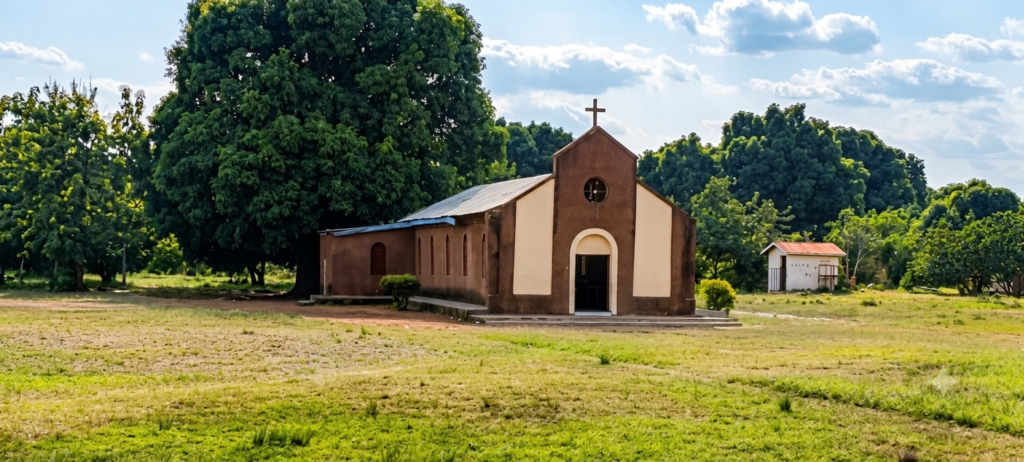
Sacred Heart Chapel Kworijik luri started as Chapel under All Saints Parish Rejaf in 1946 by Fr. Tartizio Lodu known as Lodu lo Mugoro. It was supposed to be in Nyaing Village but people refused because they were under Episcopal Church of Sudan (ECS) influence so the founder move the Chapel to Komiru Village. Also in Komiru, the father faced difficulties with the community and it was move to Kworijik Luri that same year with a Catechist called Ticiano Lodu a native of Komiru.
Sacred Heart Parish became a Parish in 1952. It was run by Comboni Missionary headed by Monsignor Tartizio Lodu. The Parish was with many youth active with various Activities.
In 1962 when the Comboni were expelled by the Regime of the Khartoum Government, the Parish came under diocesan priests.
During the time of our first Archbishop of Juba: Ereneo Wien Dut in 1970s, Fr. Michael Barton a Comboni Missionary was put as the Parish priest and worked hard until 1987.
From the time of the Late Archbishop Paulino Lukudu Loro, the parochial activities boasted, the number of the youth in the parish increased and the African synod to be implemented, songs started to be composed, sung in the church and taught in Bari language. One of those Youth was called Acolyte Henry Jubek who contributed with many songs in Bari and others languages followed.
The Parish is bordered by St. Kizito in the south, Mary queen in the South -west, St. Peter Rokon in the North West, St Mary Immaculate Terekeka in the North, and St. Joseph in the South East. St. Francis of Assisi in the East and Holy Rosary in the South.
The Parish has 13 chapels. St. Martin de Porres established 1960, St. Monica 2004, St. Gabriel 2008, Lupepe one 2008, Lupepe Two 2009, Kose 2009, Kose one 2010, Kose Two 2011, Illikare 2005, St. Josephine Bakhita 2014, Dari One &Two 2009, 2009, Bari Kiden 1987, Lumonik 1986. Longe 2014 and other no Names. The Parish Mission is to evangelize the People of God through Preaching, learning and services to the People of God.
11: St. Mary Immaculate- Terekeka
Historical Background:
Location and People
St. Mary’s Immaculate Parish Terekeka is situated 52 miles north of Juba, the capital city of the Republic of South Sudan. The parish serves the Mundari people, who are predominantly agro-farmers cultivating crops such as groundnuts, dura, and small beans. In recent years, cattle keeping has become a priority for the Mundari community.
Parish Statistics
-
-
- Largest Parish: St. Mary’s Immaculate is the largest parish in the Catholic Archdiocese of Juba.
-
- Coverage: Covers a vast land of 120 villages.
-
- Chapels: 87 chapels divided into 11 administrative sub-parishes (centres).
-
- Furthest Reach: Approximately 48 miles from the main parish centre.
-
- Catechists: About 229 catechists.
- Faithful: Approximately 136,796 believers.
-
The Mundari people are devout Catholics, although some denominations are rising within the main township and in a few villages, alongside a small Muslim population.
Foundation and Early History
-
-
- 1948: The foundation of a bush school / elementary school at Ku’dile was established.
-
- 1952: St. Mary’s Immaculate Parish was officially inaugurated as a parish by the Comboni missionaries.
- The Ku’dile school became famous and contributed to the education of many South Sudanese, including:
-
-
- Late Archbishop Paolino Lukudu Loro
-
- Fr. Abel Mödi Nyörkö (RIP)
- And many more elites in South Sudan
-
-
-
Challenges During the Civil War
-
-
- 1964: Missionaries were expelled from Southern Sudan by the then Sudan government, leaving the parish vacant.
-
- Fr. Quiriko Kudro was assigned to reside in Ku’dile, assisted by Fr. Okelo. However, a year later, Fr. Quiriko deserted the parish, leaving it vacant again.
-
- 1979: Fr. Michael D. Barton Mccj was named Parish Priest of Sacred Heart Parish Kworijik, with Terekeka as an outstation annex.
-
- 1989–1994: Mass displacement of the Mundari people to camping centres in Jebel Kujur and Tomping in Juba occurred due to the civil war.
- 1992: A second missionary expulsion from Juba to Khartoum took place. Fr. Mödi Abel Nyörkö, Fr. James Oyet, and Fr. Mauro Lopolo served as visiting priests for the outstations of Terekeka, Tali, and Rokon.
-
Faithful Catechists Who Sustained the Faith
Despite the challenges, the Catholic faith was sustained by dedicated catechists:
-
-
- Catechist Cornelio Könyi – Now above 82 years old, he is likely the oldest long-serving catechist in the Catholic Archdiocese of Juba.
-
- Catechist Richard Loku
- Catechist Pasiente Yebin
-
During the revolutionary years of Anyanya One (1955) and the Sudan Peoples’ Liberation Movement/Army (1983), and following the expulsion of missionaries in 1964 and 1992, St. Mary’s Immaculate Parish was left under the hands of Catechist Cornelio Könyi. He sustained the parish with local efforts until the return of calm in 1996.
Re-opening and Re-activation of the Parish
-
-
- 1996: The administration of the Archdiocese of Juba, viewing some relative calm, requested Fr. James Lodu Loro and Fr. Methodius Lomude to lead the re-opening and re-activation of St. Mary’s Immaculate Parish Terekeka.
-
- They were later joined by Fr. Gabriel Asida (who was then a deacon).
- This second re-opening of St. Mary’s Immaculate is what brought us to where we are today.
-
Structure of the Parish
The Parish is divided into four (4) zones, which are broken into eleven (11) administrative sub-parishes (centres) headed by coordinators.
1. Main Parish
Composed of two (2) sub-parishes (centres):
a. St. John Paul II Wujungani Centre
Chapels:
-
-
- St. John Paul II (Wujungani)
-
- St. Matthew (Longa)
-
- St. Henry (Bukö Miduk)
-
- St. Calisto (Lokweni)
-
- St. Philip & James (Kokgi)
-
- St. Charles Luwanga (Bura)
- St. Martha (Nan Ti-Kö)
-
b. St. Joseph Lojora Centre
Chapels:
-
-
- St. Joseph (Lojora)
-
- St. John (Umbili)
-
- St. Francis of Assisi (Kuru ku Bangi)
-
- St. Cornelio & Supriano (Siliwa)
-
- St. Robert (Bukö Muduk)
-
- St. Mary Magdalene (Piru)
-
- St. Benedict (Lopuja)
- St. James (Gondi)
-
2. Central Zone
Composed of four (4) sub-parishes (centres):
a. St. Kizito Kutu-na-woko Centre
Chapels:
-
-
- St. Kizito (Kutu-na-woko)
-
- St. Margret (Böjör)
-
- St. Paul Miki (Kwörinyang)
-
- St. Francis (Gwolosa)
-
- St. Rita (Lowirja)
- St. Sisto (Ligi)
-
b. St. Stephen Gwulukuk Centre
Chapels:
-
-
- St. Stephen (Gwulukuk)
-
- St. Martin of Tour (Mokamagor)
-
- Gwulukuk Two
-
- St. Margret (Morja-Jur)
- Holy Rosary (Wongki)
-
c. St. Philip Bura Centre
Chapels:
-
-
- St. Philip (Bura)
-
- Holy Trinity (Bobone)
-
- St. Dominic
-
- Tibari
-
- Gwele
-
- Salam Lumasi
-
- Kuruse lokele (Jongor)
-
- St. Rose of Lima (Löngi)
- St. John the Baptist (Nan-Tapar)
-
d. St. Ereneo Rijong Centre
Chapels:
-
-
- St. Ereneo (Rijöng)
-
- St. Marko (Loputu)
-
- SS. Timothy and Titus
-
- Gwerke
-
- Langi One
-
- St. Andrew (Langi Two)
-
- Jobur
- Kuru ku yöyö
-
3. Southern Zone
Composed of one (1) administrative centre:
a. St. Peter Nyori Centre
Chapels:
-
-
- Annunciation of the Lord (Nyori Eucharistic Centre)
-
- St. Bakhita (Meridi)
-
- All Saints of Africa (Bariarie)
-
- St. Daniel Comboni (Muruti)
-
- St. Thomas Aquinas (Monoja)
-
- St. Anthony (Bambari)
-
- St. Peter & Paul (Ku’da)
-
- St. Josephath (Jongkok)
-
- St. Elizabeth & Zechariah (Dungköyö)
-
- St. John Bosco (Mayong)
- St. Paul (Mangkaro)
-
4. Northern Zone
Composed of four (4) sub-parishes (centres):
a. St. Michael Tukörö Centre
Chapels:
-
-
- St. Michael (Ku’di’yso)
-
- St. Monica (Nyikabur)
-
- St. Dominic (Aporong)
-
- St. Margret (Wösule)
-
- St. Gregory (Kwörinit)
-
- St. Elizabeth (Bo’dok)
-
- St. Simon (Muduk)
- St. Peter Clever (Görö)
-
b. Sacred Heart of Jesus Jai Eucharistic Centre
Chapels:
-
-
- Sacred Heart of Jesus (Jai)
-
- St. Theresa Gabuta (Lwoki)
-
- St. Charles Borromeo (Gwele Gabuta)
-
- St. Chrisphino (Baisek Gabuta)
-
- St. Agata (Koka Gabuta)
-
- St. Vincent (Mijur)
- Assumption of B.V.M (Marakak)
-
c. St. Luke Yukara Centre
Chapels:
-
-
- St. Augustine (Bekat)
-
- Holy Family (Marakak 2)
-
- St. Thomas (Pojur)
-
- St. Martin De Porres (Böri)
-
- St. George (Jai 2)
-
- Christ the King (Jungunamasi)
-
- St. Cecilia (Awang)
- St. Joseph Chalaza (Bakgo)
-
d. St. Joseph the Worker Wudu Centre
Chapels:
-
-
- St. Joseph the Worker (Wudu)
-
- St. Margret Böri (Dendakiteng)
-
- All Saints (Tombek)
-
- St. Pio (Mula)
-
- St. Lawrence (Giging)
-
- St. Alberto (Bukö Bakgo)
-
- St. Buruno (Diarabala)
-
- St. Hillary (Nawunguli)
-
- St. Cosmas & Damian (Bukö Jologo)
- St. Ernesto (Swakle)
-
Historical Milestones
-
-
- 2017: St. Mary’s Immaculate Parish hosted the first Episcopal Vicar, Rev. Fr. Gabriel Asida Andrew, of Terekeka Vicariate.
- 2022: Following the first visit of the third Metropolitan Archbishop of the Catholic Archdiocese of Juba, current Cardinal Stephen Martin Ameyo Mulla, four (4) administrative centres were elevated to Eucharistic centres:
-
-
- Nyori
-
- Jai
-
- Bura
- Kutu-na-woko
-
-
-
Summary of Organization:
| Zone | Number of Centres | Centre Names |
| Main Parish | 2 | St. John Paul II Wujungani, St. Joseph Lojora |
| Central Zone | 4 | St. Kizito Kutu-na-woko, St. Stephen Gwulukuk, St. Philip Bura, St. Ereneo Rijong |
| Southern Zone | 1 | St. Peter Nyori |
| Northern Zone | 4 | St. Michael Tukörö, Sacred Heart Jai, St. Luke Yukara, St. Joseph the Worker Wudu |
| TOTAL | 11 |
12: Holy Cross – Kondokoro
Historical Background:
The people of Gondokoro were privileged to receive and host the first Missionary to this Archdiocese Don. Angelo Vinco from the Diocese of Verona. This evangelizer came in 1849 using the river Nile transportation. Fr. Vinco lived, preached and died in 1852 in Gondokoro. His grave is still visible therein. Other Verona fathers under the headship of St. Daniel Comboni who was inspired by Vinco himself subsequently came to establish a mission in Gondokoro in 1913. After six years they abandoned the mission on July 16, 1919 for logistical and health purposes. They finally settled at Rejaf.
Establishment of the Parish:
The parish was established on June 16, 2019 during the centenary of faith celebrations by His Grace Paolino Lukudu Loro after hundred and sixty seven years since Don Angelo Vinco arrived at Gondokoro. This came as a result of the request of the faithful, elders, chiefs and intellectuals of Gondokoro because of the fact that faith in this Archdiocese started in their locality. As such, celebrating the centenary of faith without Gondokoro for them would be inappropriate. On the other hand, Archbishop Paolino, after having reviewed the request and the viability of the said intention finally granted the parish with the name of Holy Cross to remind the faithful in Gondokoro of how the missionaries suffered and died in their land and why they had to leave Gondokoro for Rejaf.
13: St. Charles Lwanga- Lokiliri
Historical Background:
St. Charles Lwanga’s Parish – Lokiliri is situated in Lokiliri Payam, 75km east of Juba Town. The parish is bordered to the east by St. Joseph the Worker’s Parish – Lirya, to the west by St. Mathew the Apostle’s Parish and St. Vincent De Paul Gumbo, and to the south by Assumption Parish – Loa and Magwin.
The inhabitants of St. Charles Lwanga’s Parish are mainly Olu’ba, with a quarter of the population comprising Bari, Ma’di, Acholi, Congolese, Kenyan, Ethiopian, Eritrean, Ugandan, Logwara, and a few Dinka communities.
Early Evangelization (1919–1930)
-
- 1919: The Catholic Church Mission was established at Rejaf, on the eastern bank of the White Nile from Gondokro.
- 1920: The first preaching of Christianity was made to the inhabitants of the Olu’ba people from the Catholic mission in Rejaf.
- 1920–1930: Thousands of inhabitants from Lokiliri, the main centre of the Olu’ba people, flocked to Rejaf mission for catechism instruction and baptism.
- Due to the large numbers, the Catholic Church Mission at Rejaf sent lay catechists to establish catechetical centres around the Olu’ba Area:
-
- Catechist Compeo – stationed at the Main Centre (where St. Charles Lwanga’s Parish now stands)
- Catechist at Lomega – deployed at a place now called Lomega
- Catechist at Gila-Kagu – deployed in Aru Village
-
Challenges and Famine (1930–1940)
-
- 1930: A great famine swept throughout the country, and the catechists could not sustain their work.
- 1930–1940: The inhabitants of Olu’ba returned to receiving catechism instructions at the Catholic Mission in Rejaf as they had done before.
Renewed Efforts and Setbacks (1940–1946)
-
- 1940: Monsignor S. Mlakic, Prefect Apostolic (1938–1950), decided to send Cirillo Wani, a son of the Lokiliri area who had studied at Okaru Seminary, to evangelize his people and open a school.
- The missionaries’ plan was for Cirillo Wani to prepare the ground for building a parish for the Olu’ba, who had shown strong Catholic faith.
- Government Rejection: The government rejected the plan to build the parish, citing safety concerns for White Missionaries in the remote interior.
- Relocation: Monsignor Mlakic insisted and instructed Cirillo Wani and Chief Lolik Lodu to relocate the parish to a safer place. Chief Lolik Lodu chose Lirya because it was located on the main road between Juba and Torit.
- 1946: St. Joseph the Worker’s Parish, originally intended for Lokiliri, was finally built in Lirya for both the Olu’ba and Lokoya communities. It was promised that the parish would return to its original site at Lokiliri when conditions improved.
Years of Uncertainty (1946–1972)
-
- The promise to return the parish to Lokiliri never materialized.
- 1972: The Addis Ababa Peace Accord was signed.
- Fr. Anania Lodu Bepo was sent to open Lirya Parish. However, being the only priest, he could not manage the work in all centres. Most centres remained unvisited for the whole year, leading many faithful to join other Protestant churches.
Revival and Growth (1986–1987)
-
- 1986: Archbishop of Juba, His Grace Paolino Lukudu Loro, installed John Gowan as Parish Community Leader.
- After a three-year leadership course, John Gowan was sent to Lokiliri to rebuild and reconstruct chapels in all Olu’ba Villages.
- Palm Sunday 1987: St. Charles Lwanga’s Parish was declared a Sub-Parish under Lirya Parish.
Disruption and Displacement (1987–2005)
-
- 1987: The SPLM war intensified, bringing evangelization work to a halt. The parish and its Sub-Parish in Lokiliri were forced to move to Juba.
- 2005: The Comprehensive Peace Agreement was signed, allowing the parish to return to its original place at Lirya, together with its Sub-Parish at Lokiliri.
Elevation to Full Parish (2022)
-
- Sunday, 27th February 2022: St. Charles Lwanga’s Parish was declared a full Parish by H.G. Archbishop Dr. Stephen Ameyu Martin Mulla, the Metropolitan Archbishop of Juba, due to the rapid increase in the Christian population in the Olu’ba vicinity.
Pastoral Areas
The parish has three big pastoral areas:
-
- Lokiliri – Main Parish
- St. Josephine Bakhita Chapel – Aru Junction
- Nesitu Chapel – Now being served by Silesian of Don Bosco – Gumbo
Administrative History
-
- St. Charles Lwanga’s Parish was mainly administered by Cirillo Wani and Acolyte John Gowan during its time as a Sub-Parish.
- The parish is now cared for by Fr. Johnson Jada Kalisto.
Challenges and Resilience
The parish was deprived of Archdiocesan activities and participation for almost 21 years of civil war. Despite these challenges, the faith of the Olu’ba people remained strong, culminating in the elevation of St. Charles Lwanga’s Parish to a full parish in 2022.
14: St. Peter The Apostle – Rokon
Historical Background:
St. Peter the Apostle’s Parish – Rokon is located 55 miles West of Juba City. Mary Immaculate Conception Parish -Terekeka, the two parishes, which formed the current Terekeka Pastoral Region, borders the parish to the North West by, Christ the King Parish -Tali and to the North East. To the South, it is bordered by St. Josephine Bakhita Parish – Wonduruba, and to the East, Sacred Heart Parish – Kworijik Luri, and to the West St. Peter Parish – Mundri of Yei Diocese, borders it.
St. Peter the Apostle’s Parish became a Sub – Parish of Sacred Heart Parish Kworijik-Luri in 1986. Because of the rapid increase of Christian population in Yangwara vicinity, St. Peter the Apostle was inaugurated and confirmed a Parish in March 2001 by His Grace Paolino Lukudu Loro. However, it was temporarily based in Waka – Lo’bijo (which is known as Jebeleen) about 46 Miles from Juba City.
The inhabitants of St. Peter Parish are mainly the Yangwara (Bondongoro), and a quarter of Mundari from Pojulu Timor and Kowori. The parish has Four big pastoral zones namely, Rokon Main Zone, Kuda-West Zone, Tijor Zone, and Kowori Zone. Each zone has many Chapels or Prayer Centres.
Therefore, the history of St. Peter the Apostle’s Parish – Rokon, started this way; Seminarians initiated the parish in June 2001. Seminarian Oliver Nyara being the first administrator, and with him were, Seminarian Emmanuel Jube, Seminarian Simon Lodu, Seminarian Compeo Yuggu, Seminarian James Lodu, Seminarian Alfred Loro, Seminarian Onesimo Kenyi and Seminarian Angelo Loku.
Before and after the signing of the Comprehensive Peace Agreement, St. Peter the Apostle’s Parish was administered by the following priests: the first Parish Priest was late Fr. Yakobo Rondyang, followed by Fr. Joseph Yomoi Solomon, Fr. Moris Lodu, Fr. Prudensio Loku, Fr. Saturnino Lodu, Fr. Kasimiro Mogga, Fr. Joseph Opwoya, Fr. James Pitya and Fr. Prudensio Loku. Again, in 2008, Seminarian Denis Lodu administered it in the absence of the Parish Priest and then Fr. Angelo Loku became the Parish Priest, followed by Fr. Johnson Jada, Fr. William Wani and currently Fr. Joseph Wani
ESTIMATED POPULATION: The estimated population of the faithful is about 15,000 people, most of them are drawn from two Payams of Rokon and Tijor of Juba County, and few others are the inhabitants of Dolo Payam of Juba County, and Rijong Payam of Terekeka County.
15: St. Mathew The Evangelist- Lobonok
Historical Background:
St. Mathew the Evangelist Parish-Lo’bonok is one of the parishes of the Eastern Deanery of the Catholic Archdiocese of Juba. Historical records states that the current Parish Main Centre Church was a Chapel of Rejaf Parish established by the Comboni Missionaries in 1930s and had been steered by a catechist known by the name of Teobaldo Boga who is said to be the first Catechist. Prior to its establishment, St. Mathew the Evangelist Parish-Lo’bonok was confirmed as an independent Pastoral Zone by Late Archbishop Paolino Lukudu Loro and Rev Fr. James Pitia Marcello was appointed to be in charge of the Zone from 2008 to 2010. Hereafter, St. Mathew the Evangelist Parish-Lo’bonok was officially inaugurated on 21st September 2011 by Late Archbishop Paolino Lukudu Loro and Late Fr. Charles Tombe was appointed as first parish Priest and Joseph Wani known as Opi appointed as assistant Parish Priest. The Parish currently has thirteen out stationed Chapels or Prayer centers; and they are divided into two pastoral zones namely eastern and central zones.
GEOGRAPHICAL LOCATION AND THE DISTANCE OF THE PARISH:
St. Mathew the Evangelist Parish-Lo’bonok is positioned in the southern Part of Juba town along the road that leads through Rejaf Payam. St. Mathew’s Parish is surrounded by the following neighbouring parishes: – All Saints Parish-Rejaf to the north, St. Charles Lwanga-Lokiliri to the East, Our Lady of Assumption Parish of the Catholic Diocese of Torit to the South, and the Sacred Heart Parish-Lomin of the Catholic Diocese of Yei to the west.
The distance of St. Mathew the Evangelist Parish-Lo’bonok from Juba is 54 (fifty-four) miles.
Except for Kit One area that has a chapel which is dedicated to Christ the King has a mixture of Acholi and Bari ethnic groups but St. Mathew the Evangelist Parish-Lo’bonok consist of the Bari ethnic group who are predominantly farmers who depend mainly on what the natural climate offers them in form of rainfall for the growth of their agricultural products. They frequently cultivate maize, beans, sweet potatoes and cassava as their socio-economic tops.
POPULATION In accordance with 2010-census exercise, the population of the Christian Community of St. Mathew the Evangelist Parish-Lo’bonok is figured to 856,000 out of this number 90% are Catholic while 10% non-Catholic.
OUR VISION
Inspired by the call of our Patron Saint, we are called by Jesus Christ to preach the good news of the Kingdom of God in such a way as to transform our community through Gospel values.
OUR MISSION
Our mission is to make visible the presence of Jesus Christ in our community through the celebration of the Holy Eucharist and other sacraments, and by sharing our individual gifts and talents to enhance God’s Kingdom of peace, justice, love, and joy among His people.
16: St. Josephine Bakhita- Wonduruba
Historical Background:
St. Josephine Bakhita’s Parish is the net result of distant apostolic intervention in the Wonduruba area of great Comboni Missionaries who, in 1950s as from St. Theresa’s Parish (Kator), frequently visited the area baptizing and pastorally attending to its people: 1st among these is Fr. Benedetti Luigi and in later years followed by Fr. Michael Barton (1980s) and Fr. Bizzarro Mattia. (1990s)
The local priests who have succeeded the Comboni Missionaries in Wonduruba at the height of liberation struggle in late 1990s are the following: Fr. John Lugala, Fr. Methodius Lomude.
The Inauguration as a Parish
However, the inauguration of St. Josephine Bakhita as a Parish happened on the 8th of February 2015 by His Lordship Bishop Santo Loku Pio, Auxiliary Bishop of Juba. Fr. Alex Vishwasam an MMI who became the first Parish Priest took possession of the Parish in March 2015 and on 15th of October 2015, war broke out in Katigiri, causing massive displacement of the indigenous people.
Geography The Parish of St. Josephine Bakhita has a border with St. Peter’s Parish to the North and to the South and to the West bordering Yei Diocese to the East is bordering St. Peter’s Parish (Rokon)
17: St. Joseph The Worker – Lirya
Historical Background:
St. Joseph the Worker’s Parish Lirya – Lella is in the Eastern part of the Archdiocese of Juba, founded by Comboni Missionaries in 1940 -1944 and officially inaugurated by Bishop Sisto Mozzoldi on 1st May 1946. It is about 42 miles bordering Torit Diocese.
Twenty one (21) Priests has served in the parish since 1940 -2024. Appreciation and many blessing upon them, since without them, we were not able to have something to start with or from – only that Religious men and women has never serve in the parish since time memorial.
From the zealous work of my predecessors, one pastoral zone has been elevated to the level of the parish – St. Charles Luwanga, Lokiliri. So now the parish is able to cover four (4) chapels: Assumption chapel Ngangala, Sts. Peter and Paul Ngulere, St. John The Apostle’s chapel Illiangari and St. Theresa’s Chapel Langabu. St. Joseph The Worker’s parish is 99.9% Catholics, but without a school in its name.
CHAPELS
The Parish use to have about eleven (11) chapels, but with the creation of the new parish, we are reduced to four (4) chapels plus the main centre, thus:
-
- St. Theresa’s of The Child Jesus Chapel, Langabu
- St. John The Apostle’s Chapel, Illiangari
- Sts. Peter and Paul, Ngulere
- Assumption Chapel, Ngangala
18: St. Thomas The Apostle- Mangalla
Historical Background:
St. Thomas the apostle Parish is one of the Parishes of the Catholic Archdiocese of Juba. It was established in 1999, the parish is about 86 km north East of Juba city. The parish has many tribes of South Sudan and many priests served in this parish.
The parish inhabited by Bari, Mundari, Nuer, Dinka, Shilluk and other tribes of South Sudan. Bari are the farmers and pastoralists. The people in Mangalla are served by the church and government of Central Equatoria State.
The parish was locked on 19th December 2013 during the crisis (war) in South Sudan many properties of the parish were taken including the car. The parish currently is handicapped and needs support to effective. The parish is currently operating without light.
NUMBER OF CHAPELS
The parish has two (2) pastoral zones, the Southern zone and northern zone
A. Southern Zone:
-
- Geri Centre
- Gabur Centre
- Mankaro 1 Centre
- Mankaro 2 Centre
- Jokoki Centre
- Tukoro Centre
- Logo Centre
- Tibari Centre
- Jabur Centre
B. Northern Zone:
-
- Malang Centre
- Nyarwong Centre
- Maggu Kolong Centre
- Legeri Centre
- Kworijik Centre
- Wanyang Centre
- Pokor Centre
- Jemeza Centre